

Nothing beats a sunny day by the pool. The water’s cool, the kids are laughing, and you’re finally getting that break you’ve needed all week. But pools and electricity don’t mix well, and the last thing you want is a hidden hazard, turning your fun into a dangerous situation. From pool lights to pumps, electrical equipment keeps everything running smoothly, but it can also pose a serious risk if something’s wrong. A few simple checks and the right precautions can keep your summer full of cannonballs, not close calls.
How Pool Lights Can Be Dangerous
Pool lights are one of those things you probably don’t think much about. They make evening swims more fun and give your pool that nice glow when the sun goes down. But those lights are powered by electricity, and any time you mix water and electricity, there’s a chance something could go wrong. Most of the time, everything works just fine, but if a light is old, damaged, or wasn’t installed correctly, it can turn into a serious hazard.
You might notice your pool light flickering, or maybe it’s not working at all. That’s sometimes just a burnt-out bulb, but other times, it can mean there’s a wiring problem behind the light. Water can sneak into cracks around the light fixture, corroding the wires and making it easier for electricity to leak into the water. Even a tiny current can shock you if you touch the water near the light. In rare cases, faulty pool lights have led to electrocutions, which is why it’s so important not to ignore a light that seems off.
If you’ve got older lights, especially if they’ve been in place for more than 10 years, it’s a good idea to have them checked. Technology has improved, and newer lights, like low-voltage LED ones, are safer and more energy-efficient. They use less power and are less likely to create dangerous situations. If you ever see bubbles coming from a pool light or feel a weird tingling sensation when you touch the water, get everyone out of the pool immediately, cut the power, and call our outdoor lighting services team. That’s not something you want to wait on.
Why Pool Pumps and Motors Need Extra Attention
Your pool pump is what keeps the water moving and filtering. It’s the reason your pool stays clear instead of turning into a green swamp. But that pump is powered by electricity, and it’s usually sitting outside, exposed to rain, sun, and everything else nature throws at it. Over time, that kind of exposure can wear things down.
Sometimes, you’ll hear a loud humming noise coming from the pump, or it might not turn on at all. That could be a sign of a wiring issue, or it could mean water has gotten inside the motor. If you notice rust on the metal parts of your pump or see water pooling around the base, that’s another clue that something’s wrong. Moisture and electricity don’t mix, and a corroded pump can lead to shorts, sparks, or even small electrical fires.
Older pumps, especially those that haven’t been checked in years, are more likely to have problems. If your pump trips the breaker when you turn it on, that’s a warning sign you shouldn’t ignore. It could mean there’s a short in the wiring, or the motor is pulling more power than it should. Shutting off the power to the pump and getting it looked at can prevent bigger problems down the road. Upgrading to a newer, energy-efficient pump can also lower your electric bill while reducing the risk of electrical issues.
Why GFCI (Shock Prevention) Protection Is a Pool’s Best Friend
A ground fault circuit interrupter or GFCI is one of the best safety devices you can have around your pool. It’s a special kind of outlet or breaker that shuts off power the second it senses electricity going somewhere it shouldn’t, like into water. It reacts so fast that it can stop a dangerous shock before it becomes deadly.
You might already have GFCI outlets in your kitchen or bathroom, the ones with the little “test” and “reset” buttons. Around your pool, GFCIs are even more important because of all the water and outdoor electrical equipment. Pumps, lights, and outlets near the pool should all be connected to GFCI protection. If they’re not, you could be at risk without even knowing it.
Sometimes, GFCIs trip when there’s a storm or if moisture gets into an outlet. That means it’s doing its job. But if your GFCI keeps tripping over and over, that’s a sign there might be a deeper problem, like a wiring issue or water getting into the system. Testing your GFCI outlets every month is a good habit. Just press the “test” button, make sure the power cuts off, and then press “reset” to turn it back on. It only takes a few seconds, but it can prevent something far worse.
Hidden Dangers of Poolside Outlets and Cords
When you’re setting up for a pool party, it’s tempting to run an extension cord out to power speakers, lights, or maybe even a fan. It seems harmless, but outdoor outlets and cords near water can quickly become dangerous if you’re not careful.
Not all extension cords are made for outdoor use. The ones meant for inside your house can’t handle moisture and sunlight. If you use one outside, the insulation can crack, letting water get in and creating a risk of shocks or fires. Even outdoor-rated cords can wear out over time, especially if they’ve been left out in the sun or rain.
If you’re plugging things in near the pool, outlets should always have weatherproof covers. Water splashing onto an exposed plug can send electricity into the ground or, worse, into the water. If you ever see sparks when plugging something in or if a plug feels hot, stop using it right away. Small signs like that often mean there’s a bigger issue behind the scenes.
Why Regular Inspections Are Worth It
You might feel like your pool’s electrical setup is fine because everything’s working. But electrical issues often start small and out of sight. You may experience issues behind walls, under the deck, or inside your pump. You won’t always see a problem until it becomes dangerous.
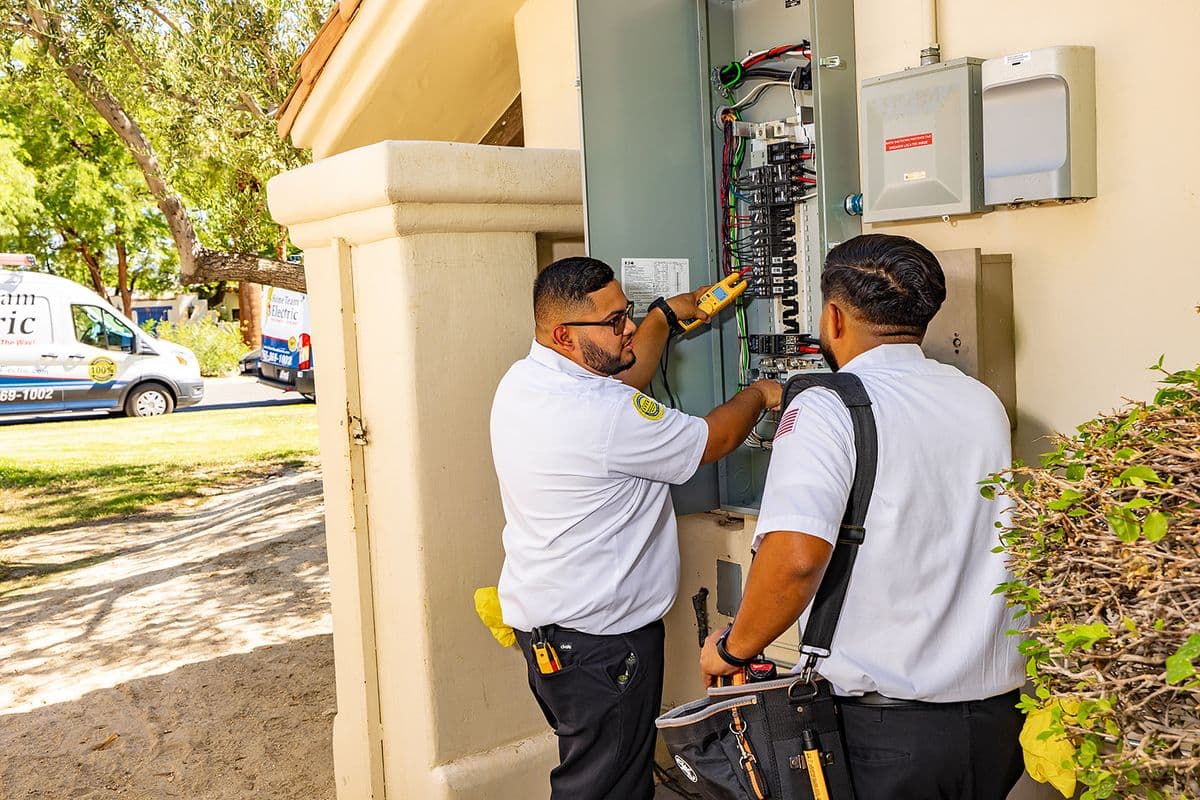
Getting your pool’s electrical system inspected at least once a year can catch those hidden issues. An electrician can check the wiring, make sure your lights and pump are properly grounded, and confirm your GFCI protection is working. They can also spot older parts that are starting to wear out, giving you a chance to replace wiring, outlets, and protective systems before something goes wrong.
Call Us Today
Your pool is meant to be a place of fun, not worry. Keeping an eye on your electrical systems, getting regular inspections, and acting fast if something seems off can keep your family safe while you soak up the sun. Accidents can happen fast, but with a little attention, you can prevent them.
If you’re ready to make sure your pool’s electrical setup is safe or need any other electrical services, schedule an appointment with Home Team Electric in Thousand Palms, CA, today.
Google Search
Get more of our updates on Google
If our work has been helpful, add us as a preferred source: Google will show more of our updates in your Top Stories and AI results. It only changes what you see.
Add as Preferred SourceWritten By

Frank Luersen
leadership
There's a running tradition inside Home Team Electric called Frank Pranks, and it says everything about the kind of culture Frank built. Ask anyone on the team about it and they'll grin before they finish explaining it. Someone sets it up, he walks right into it, the room erupts, and whether he actually sees it coming is still an ongoing debate. Frank could settle it anytime. He hasn't.
California C-10 Electrical Contractor License #879507. Verify it at cslb.ca.gov.
Published March 10, 2025