

Residential Electrical
16,000+ homeowners served.

Carbon Monoxide Alarm Installation

Home Team Electric has installed and serviced carbon monoxide alarms across the Coachella Valley and Morongo Basin since 2006, with over 25,000 completed residential projects.

Licensed, Bonded & Insured · C-10 #879507
Emergency Service, Day or Night
Serving the Desert Since 2006

The Short Answer

Are my carbon monoxide alarms actually protecting my home?

Carbon Monoxide Alarm Installation
Emergency electrical service badge
BBB Accredited Business

In homes where the homeowner has lived there for 15 years or more, carbon monoxide alarms are often missing entirely. When they're present, they're usually expired, plugged into a random outlet, or sitting in a drawer with the batteries removed because the chirping became too much to deal with.

  • California law requires CO alarms with fuel-burning equipment or attached garages
  • Hardwired alarms outperform plug-ins, which anyone can unplug and disable
  • Desert thermal cycling loosens junction box connections over time
  • Most alarms expire in 7-10 years; new batteries cannot fix it
  • Combination alarms cover both smoke and CO with fewer devices
  • Priority same-day scheduling, $99 service call, guaranteed pricing in writing
California Licensed, Bonded & Insured · C-10 #879507
Weekly Classroom Training in Our Own Training Room
Same-Day Service Available

Last verified: August 2026

28
Founder's Years in the Trade
25,000+
Residential Projects
4.9
from 1,606 Google Reviews
$99
Business-Hours Service Call

Book a Service Call

Not sure if your home is actually protected from CO?

An electrician evaluates your alarms, checks placement on every level and near sleeping areas, and explains exactly where you stand. Same-day.

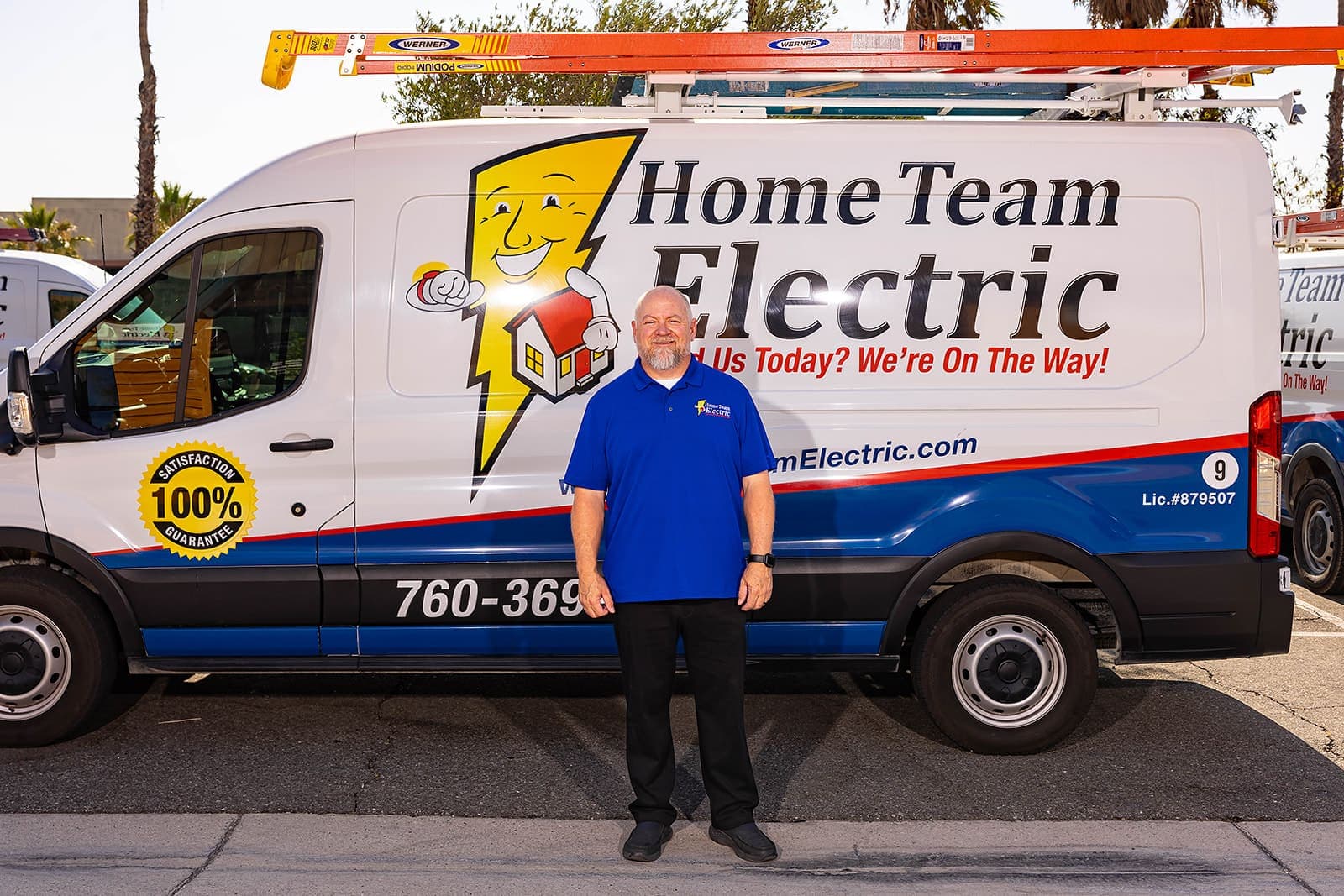
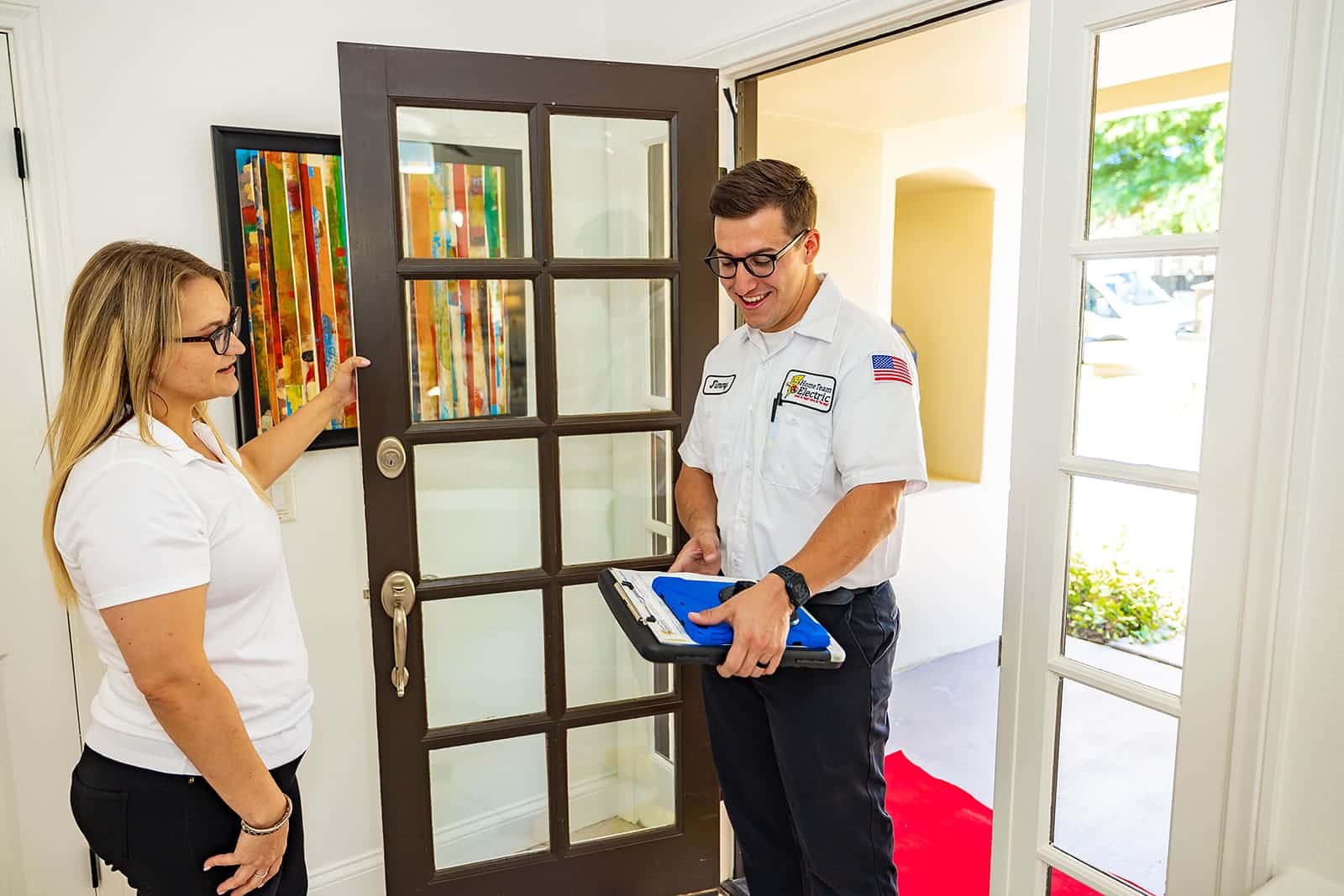
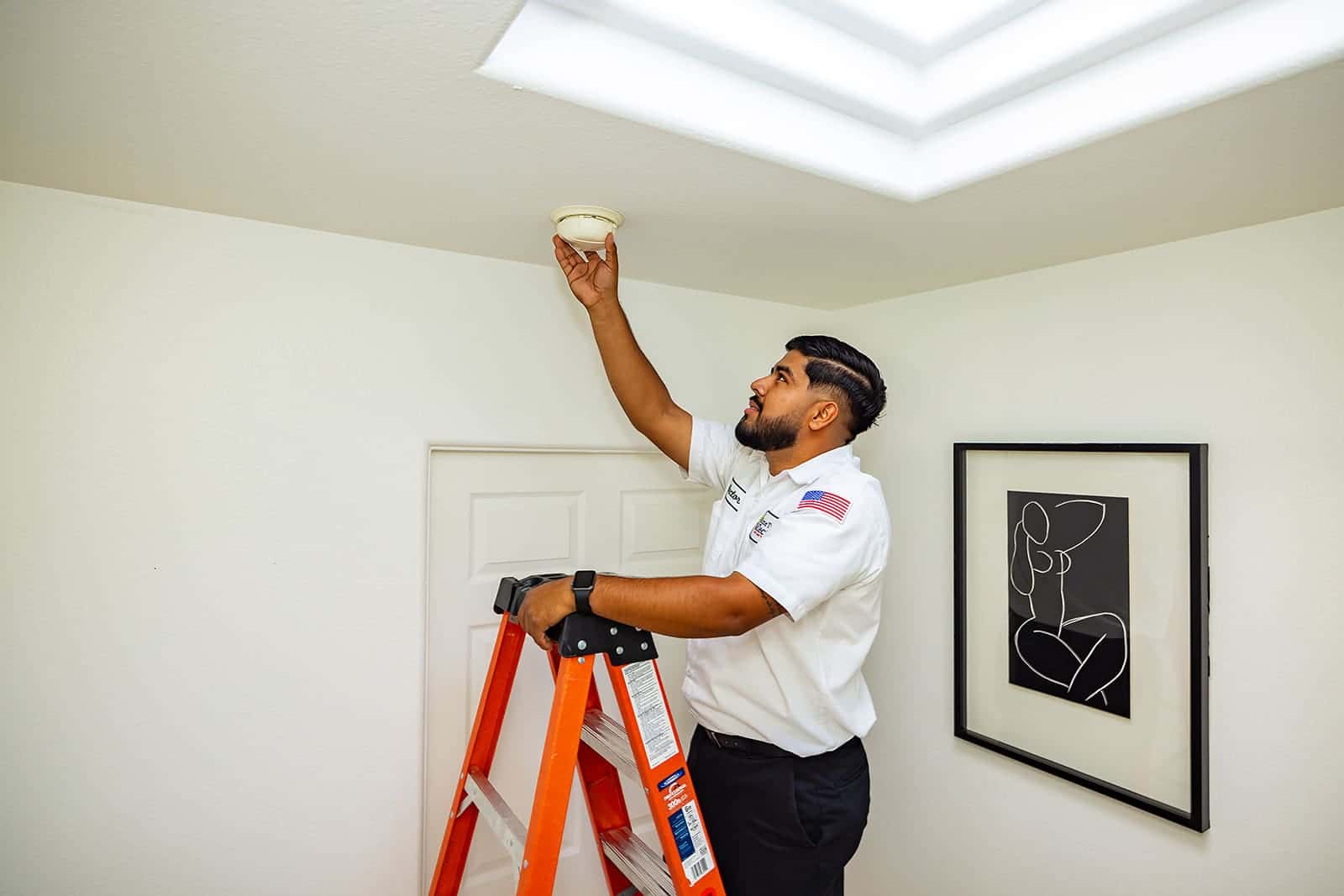
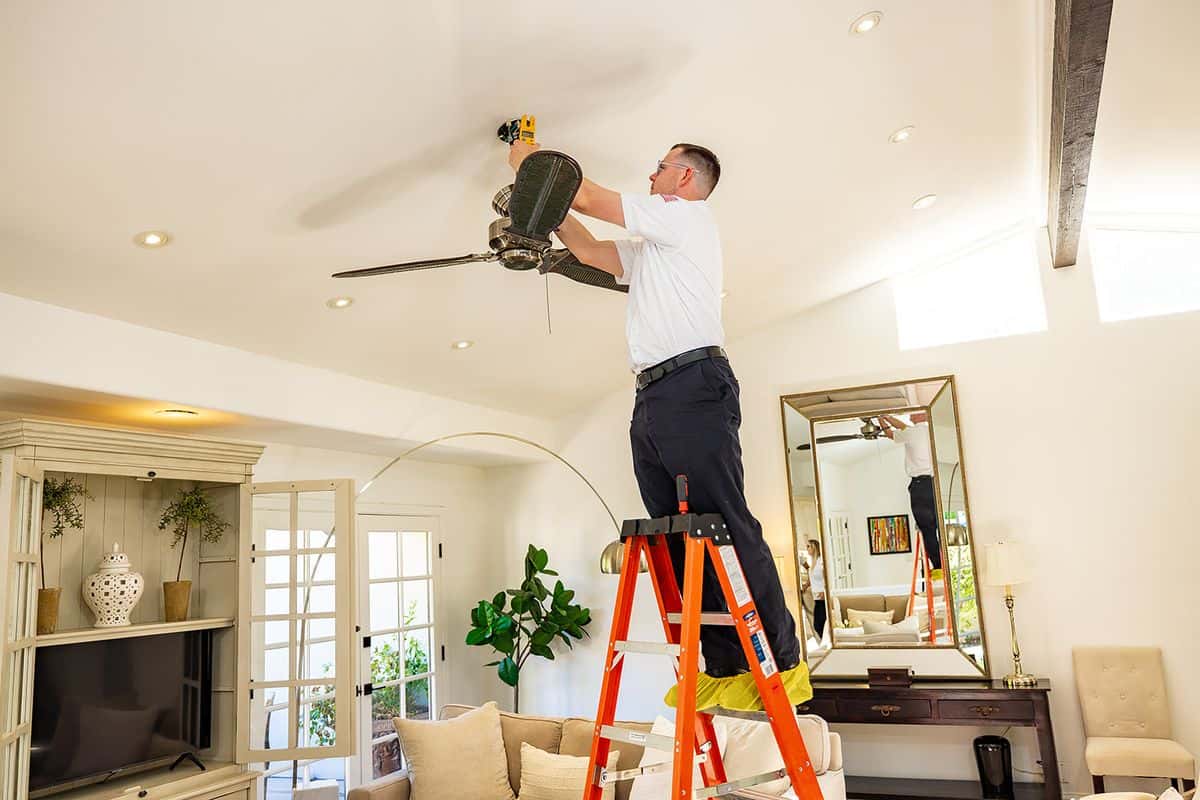
An electrician from Home Team Electric on a residential job in the Coachella Valley and Morongo Basin

Know the Signs

Signs Your CO Protection May Be Failing

Carbon monoxide is odorless and invisible, so the alarm is the only warning you get. If any of these are true in your home, it's worth having an electrician check what you actually have and where it's placed.

  • 01

    An alarm that's chirping or beeping

    A single short chirp at regular intervals usually means a low battery or an alarm that has reached the end of its life. A steady, repeating alarm pattern means it may be sensing CO right now. People silence chirps and forget them, which leaves the home unprotected for months. Don't guess at the difference. If it's making noise, find out which one it is and act on it.

  • 02

    Alarms older than their replacement date

    CO alarms don't last forever. The sensor inside degrades over time, and most carry a printed replacement date or a manufacture date on the back. Past that point the alarm can still power on and look fine while no longer detecting reliably. A dead sensor in a working-looking unit is one of the most common gaps we find. If you can't read a date, assume it's due.

  • 03

    No alarm near the bedrooms

    Most fatal CO exposures happen while people are asleep, because CO causes drowsiness and confusion before it does anything else. Code and safe practice call for an alarm near every sleeping area, not just one in a hallway by the kitchen. If there's nothing outside the bedrooms, the one place you most need a warning is the place that doesn't have one. That's the gap worth closing first.

  • 04

    Only one alarm for the whole home

    CO can build on one level while an alarm on another floor reads clean. A single unit can't cover a multi-level home, and a basement or garage-adjacent room can fill long before a hallway alarm upstairs ever sounds. Protection means coverage on every level, near the sleeping areas, positioned so no part of the home is left blind to a leak that's already started.

  • 05

    Standalone alarms that don't talk to each other

    When alarms aren't interconnected, only the one nearest the source sounds. If that's in a far corner or a closed-off room, you may never hear it from the bedrooms. Interconnected alarms all sound together the moment any one of them detects CO, so a leak in the garage wakes you upstairs. Standalone units leave the warning stuck in the wrong room.

  • 06

    Fuel-burning appliances or an attached garage

    Furnaces, gas water heaters, gas ranges, fireplaces, and any car idling in an attached garage all produce CO. A cracked heat exchanger, a blocked flue, or a closing garage door can send it into living space without a sound or a smell. Homes with these sources carry more risk and need proper detection more than homes without them. The appliance doesn't have to be broken to be worth protecting against.

  • 07

    Symptoms that ease when you leave the house

    Headaches, dizziness, nausea, or unusual fatigue that fade when you're away and return when you're home can point to low-level CO exposure. It's easy to blame a cold or a long week. If more than one person in the home feels it, or pets seem off too, treat it seriously. Get to fresh air, then have the home and its alarms evaluated. This is not something to wait out.

Frank's Translation

What a CO Alarm Actually Does

Carbon monoxide comes from anything that burns fuel: a furnace, a gas water heater, a range, a fireplace, a car in an attached garage. You can't see it, smell it, or taste it, which is exactly why it's dangerous. A CO alarm is the one sense your home has for it.

Smoke you can see and smell. Carbon monoxide gives you nothing. The alarm is the only warning the house gets.

A CO alarm watches the air continuously and sounds long before levels reach the point of real harm. The earlier the warning, the more time you have to get everyone out and get fresh air, which is the entire point.

But an alarm only protects the air it can reach. One unit in a hallway can't watch a bedroom on another floor or a room next to the garage. Coverage on every level, near the sleeping areas, and alarms that sound together is what turns a single device into actual protection.

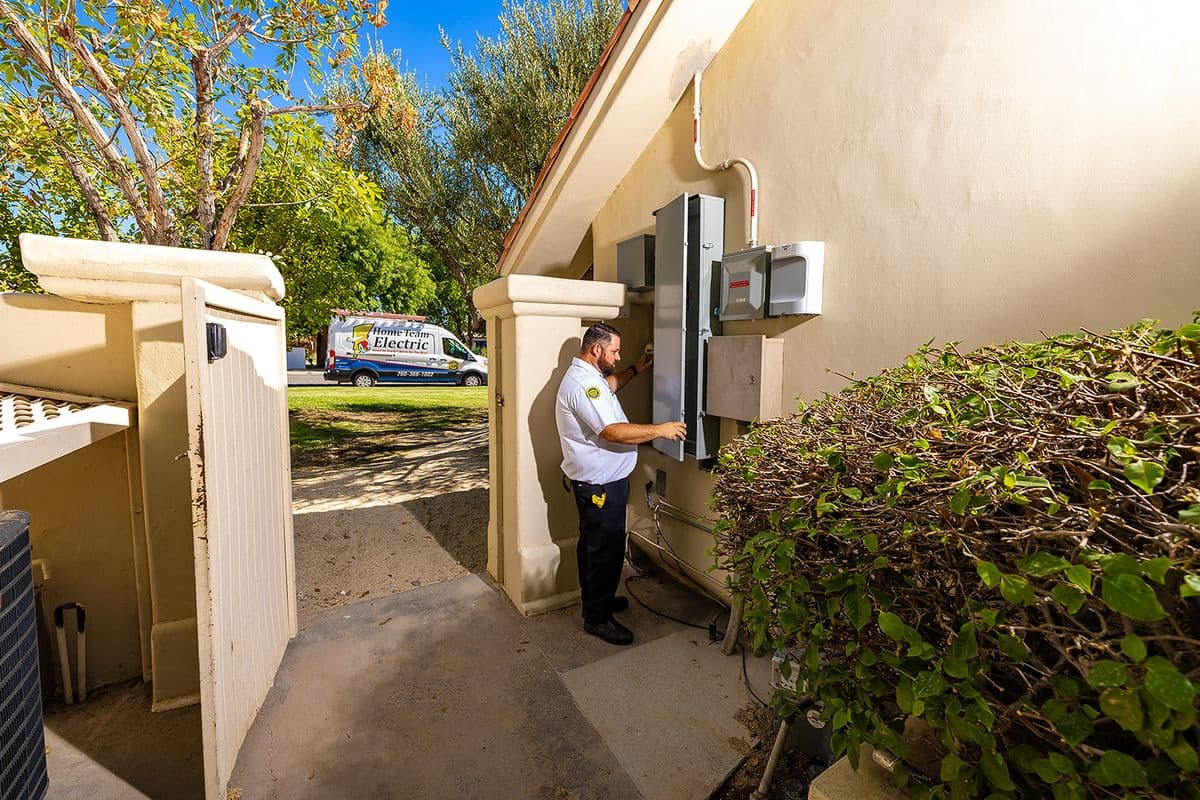
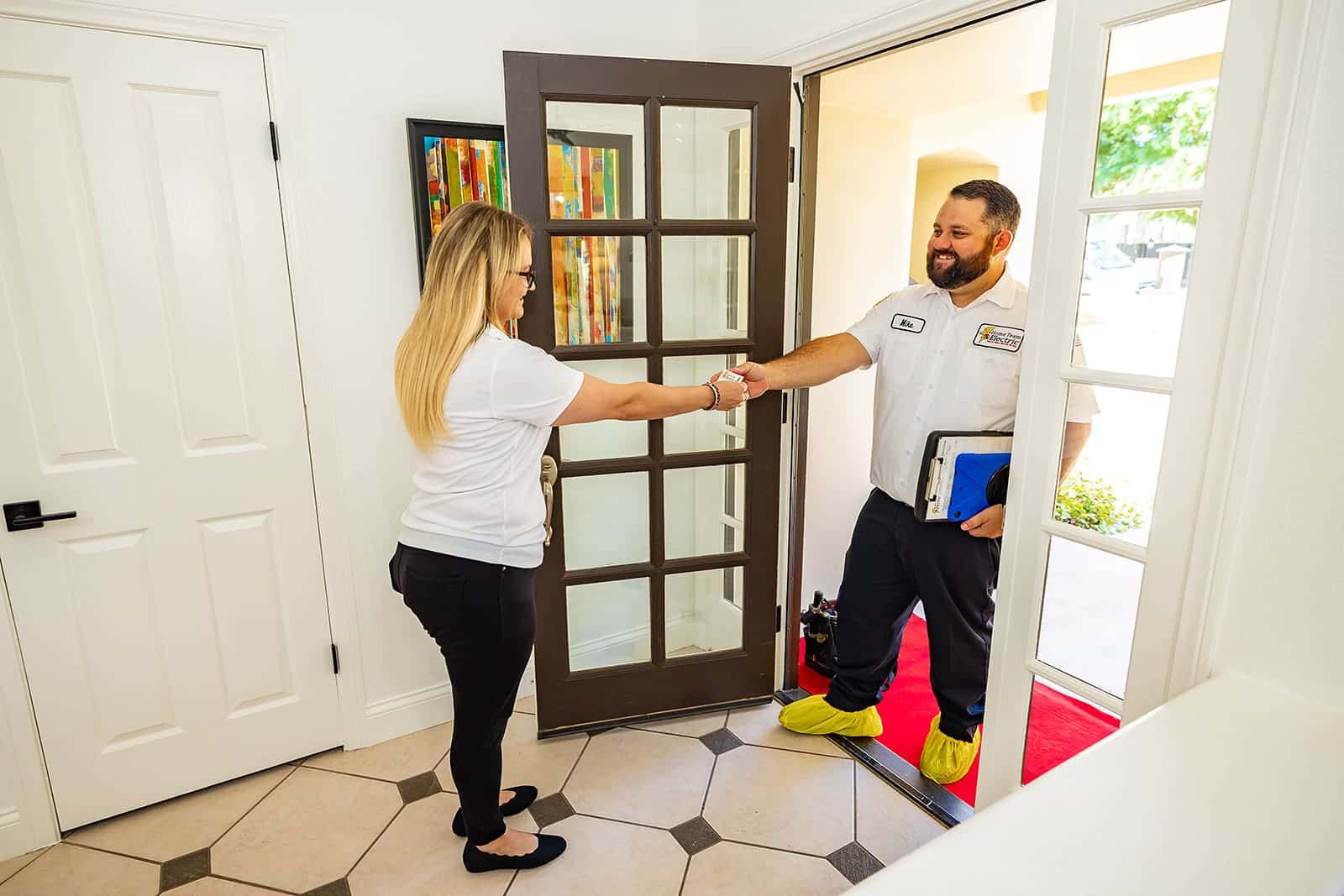
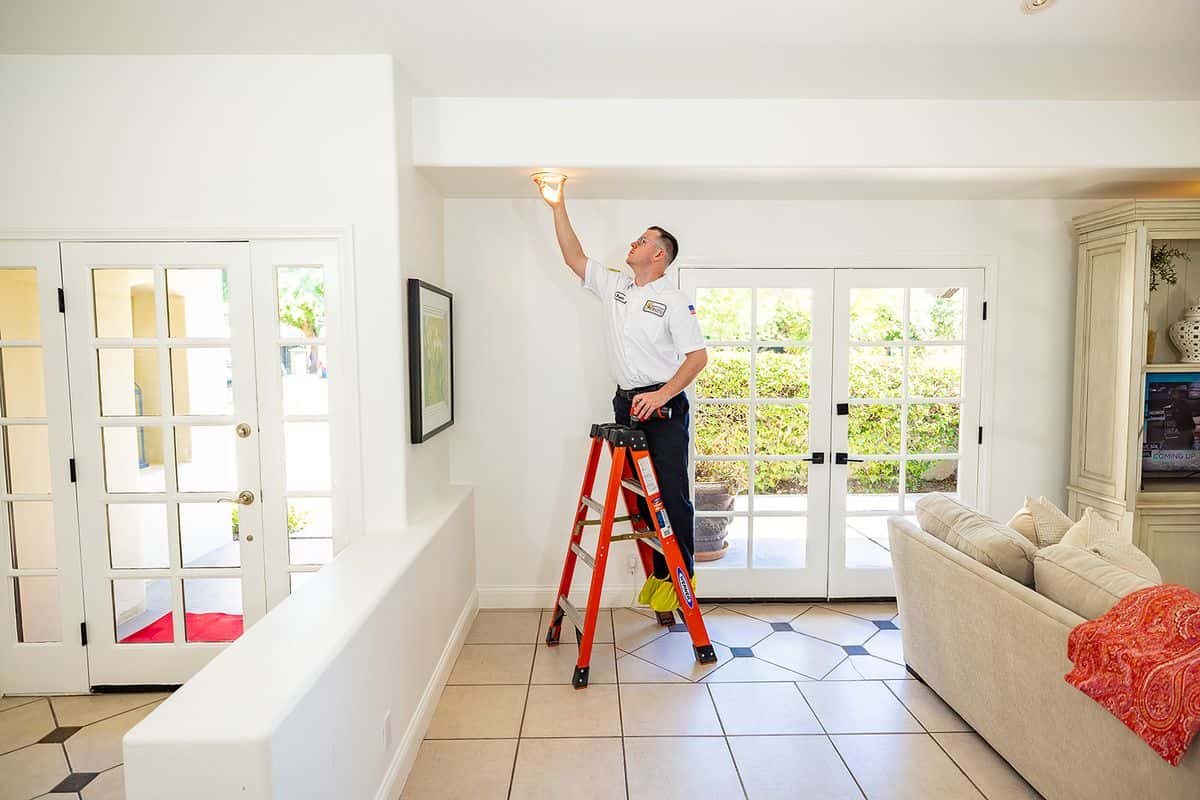
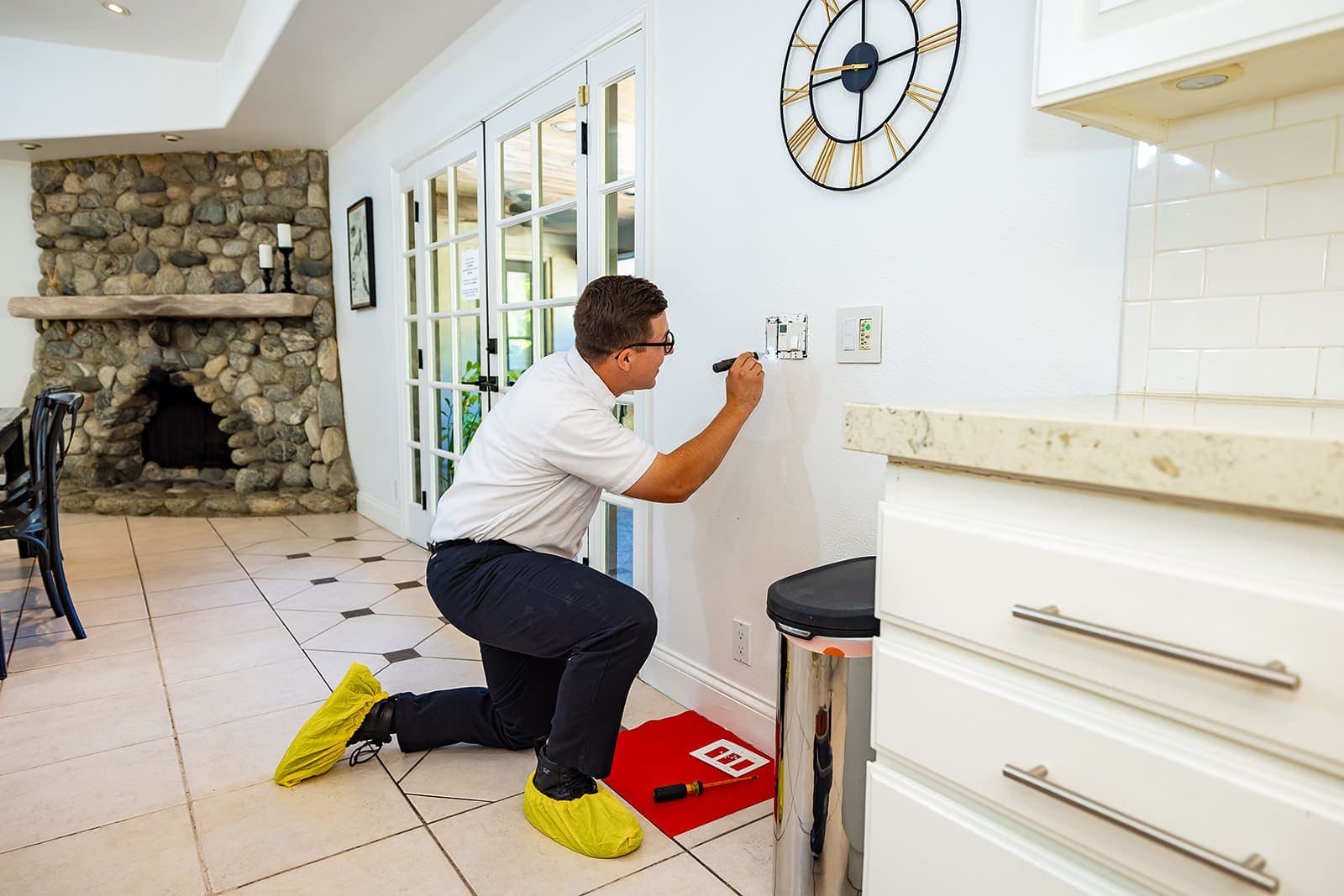
An electrician from Home Team Electric on a residential job in the Coachella Valley and Morongo Basin

A chirp you keep silencing. An alarm older than its date. One unit for the whole home. Those aren't small things. They're the warning before the warning.

How Your Alarms Are Powered

Battery, Plug-In, or Hardwired and Interconnected?

Not every CO alarm offers the same protection, and the difference is mostly about power and whether the alarms talk to each other. A battery unit in a back bedroom can detect a leak and sound while no one in another part of the house ever hears it. The goal isn't just having alarms. It's having alarms that stay powered, stay current, and all sound together the moment any one of them senses CO. The three setups below cover almost every home we see.

Here's how the three common setups compare, and why one of them is the standard we recommend for most homes.

Minimum coverage

Battery

STANDALONE

Better than nothing, but limited

Runs entirely on its own battery and works on its own. Easy to install, but it depends on you to test it and change batteries, and it only sounds where it sits. A leak in the garage won't wake you in a far bedroom.

A step up

Plug-In

BACKUP

Powered, with a fallback

Plugs into an outlet with a battery backup for outages, so it isn't relying on a battery alone. Still works as a standalone unit, though, so the alarms don't sound together and an outlet has to be available where coverage is needed.

Most homes

Hardwired

INTERCONNECTED

The protection we recommend

Wired into the home's power with battery backup, and interconnected so when one alarm detects CO, every alarm sounds together. A leak by the garage wakes you in the bedroom. This is the standard we install for most homes in the Coachella Valley and Morongo Basin.

Combo

CO + SMOKE

Many homes are best served by combination smoke and CO alarms in the right locations, which cuts the number of devices on the ceiling while covering both hazards. Whether a combo unit or separate alarms fit your layout depends on your home, your appliances, and where the sleeping areas are. That's part of what the evaluation sorts out.

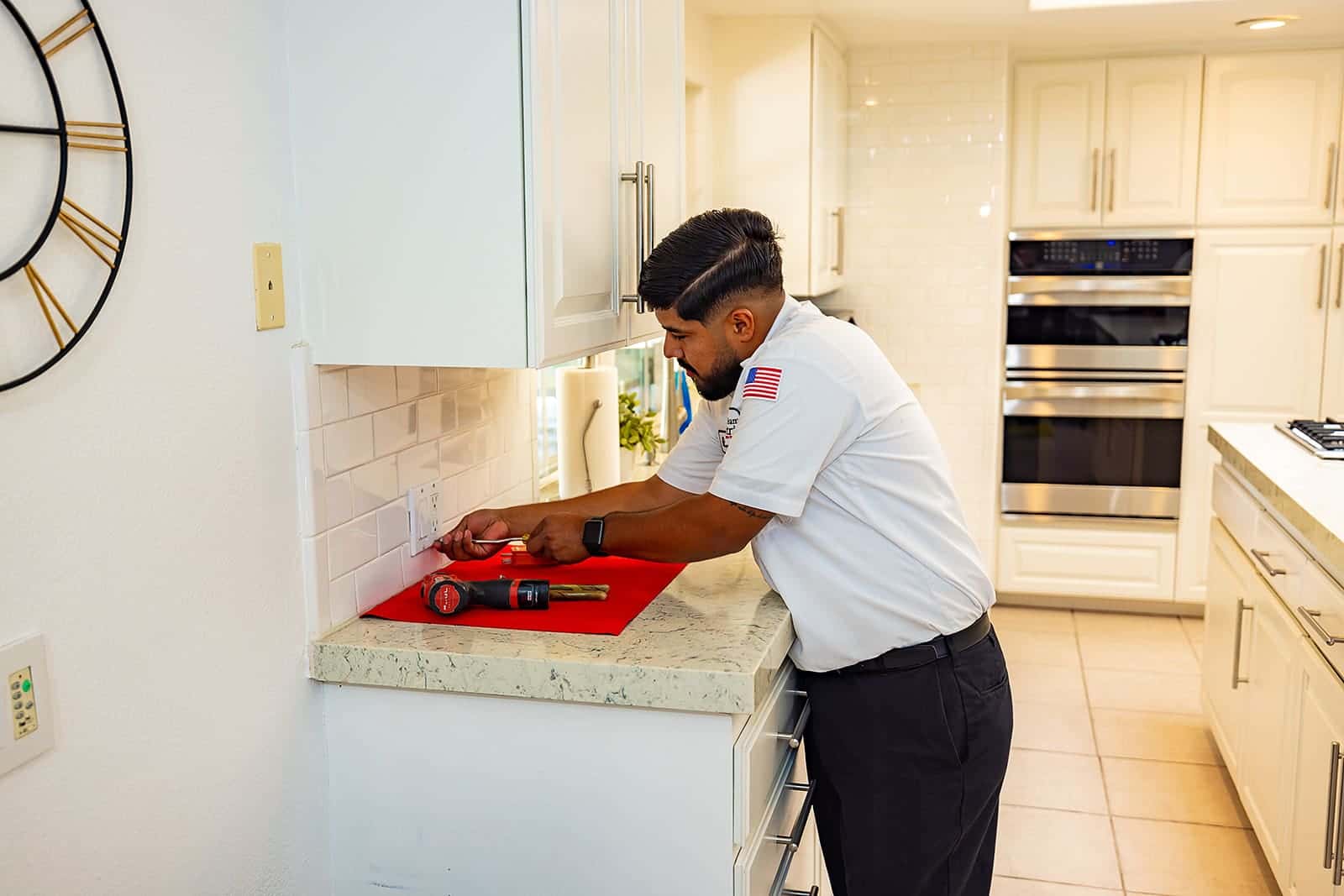
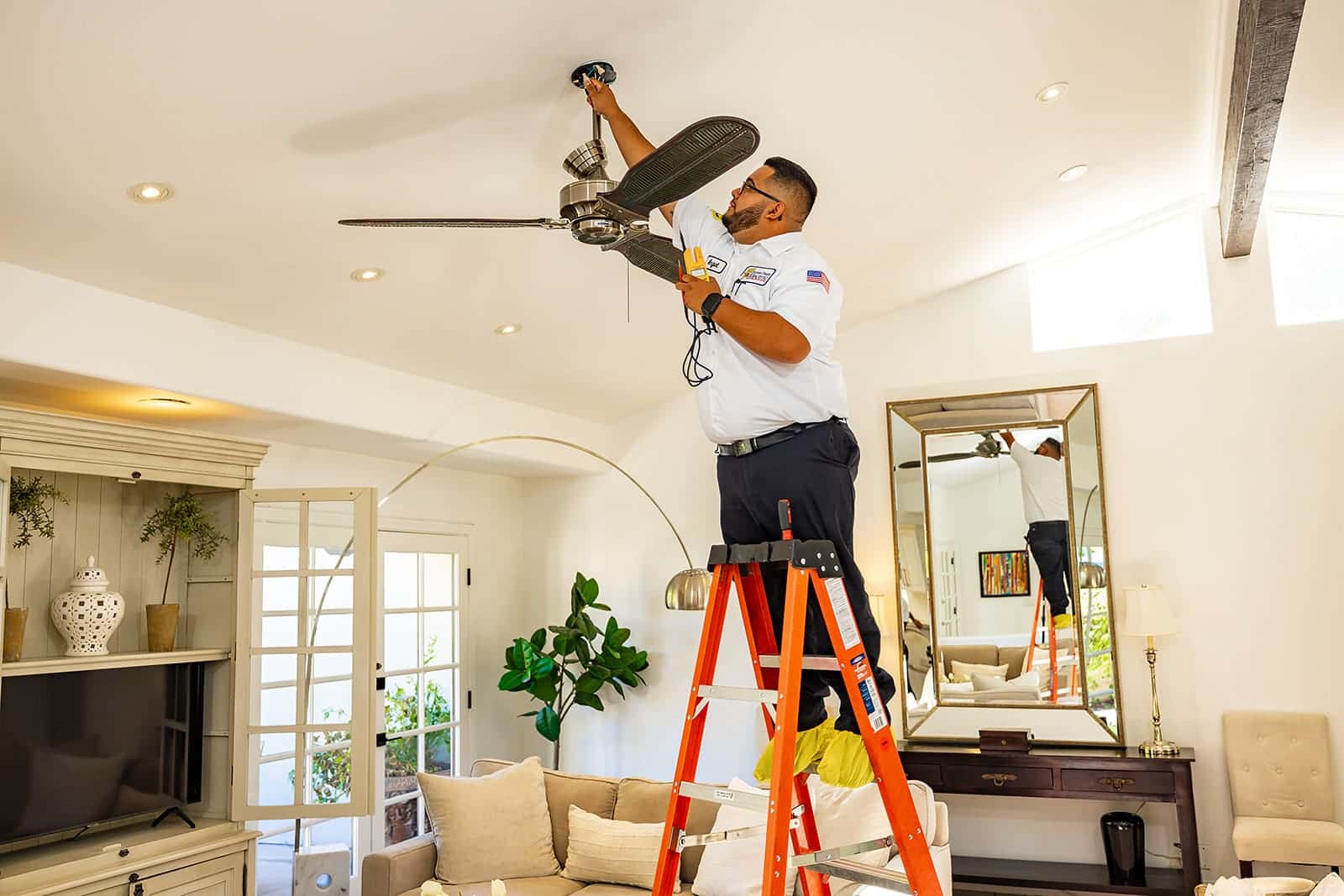
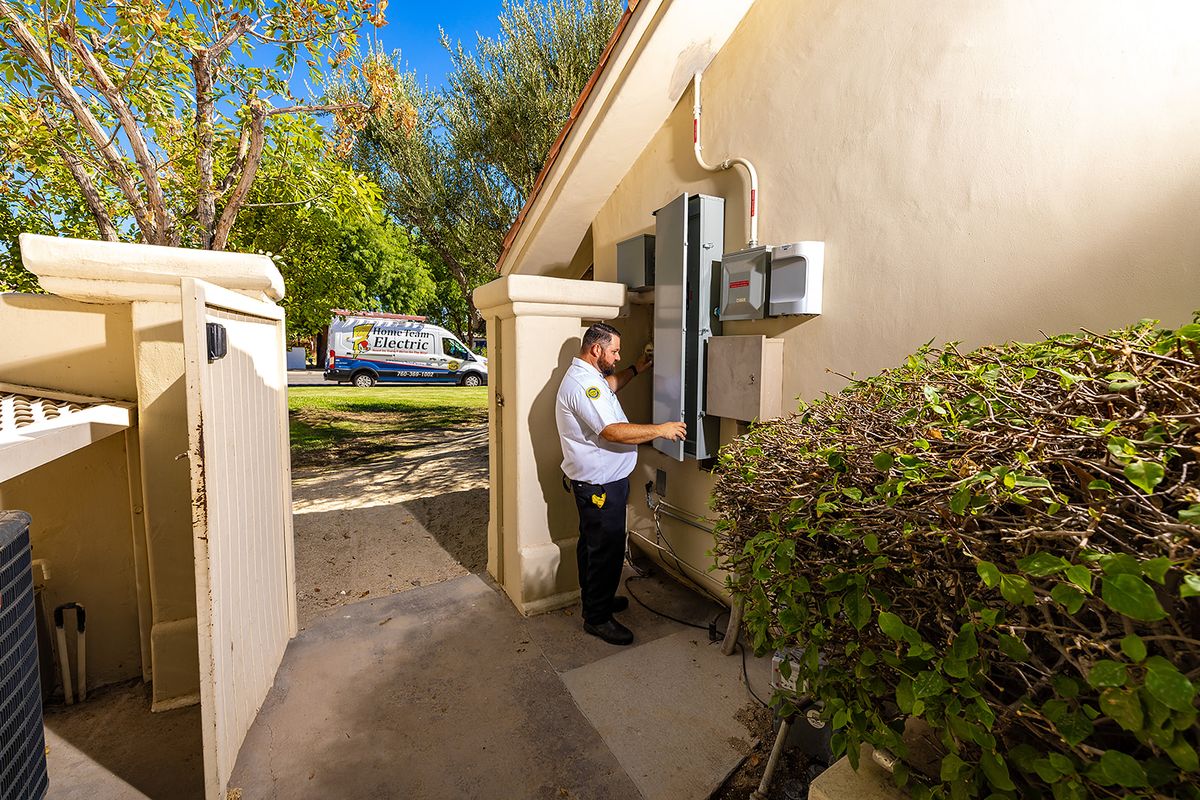
An electrician from Home Team Electric on a residential job in the Coachella Valley and Morongo Basin

No Guesswork

Correct placement is part of every $99 service call

The right alarms in the wrong spots still leave gaps. An electrician walks your home, maps every level and sleeping area against your fuel-burning appliances and attached garage, and tells you exactly what you have, what's missing, and where each alarm belongs. We evaluate first, then give you a straight answer.

How We Stand Behind It

Every CO Alarm Installation, Backed the Same Way

Every CO alarm we install gets the same foundation: correct placement, proper power, and our guarantee behind the work. The coverage levels below differ in how we back the installation and how much follow-up care comes with it.

Every Installation Includes

  • Alarms placed on every level and near every sleeping area, to code
  • Hardwired and interconnected installation wherever the home allows it
  • Battery backup so detection continues through a power outage
  • Combination smoke and CO units used where they fit the layout
  • Testing of every alarm and verification of replacement dates
  • A walkthrough so you know what each alarm does and how to test it
  • Our 100% Satisfaction Guarantee and Lifetime Workmanship Guarantee
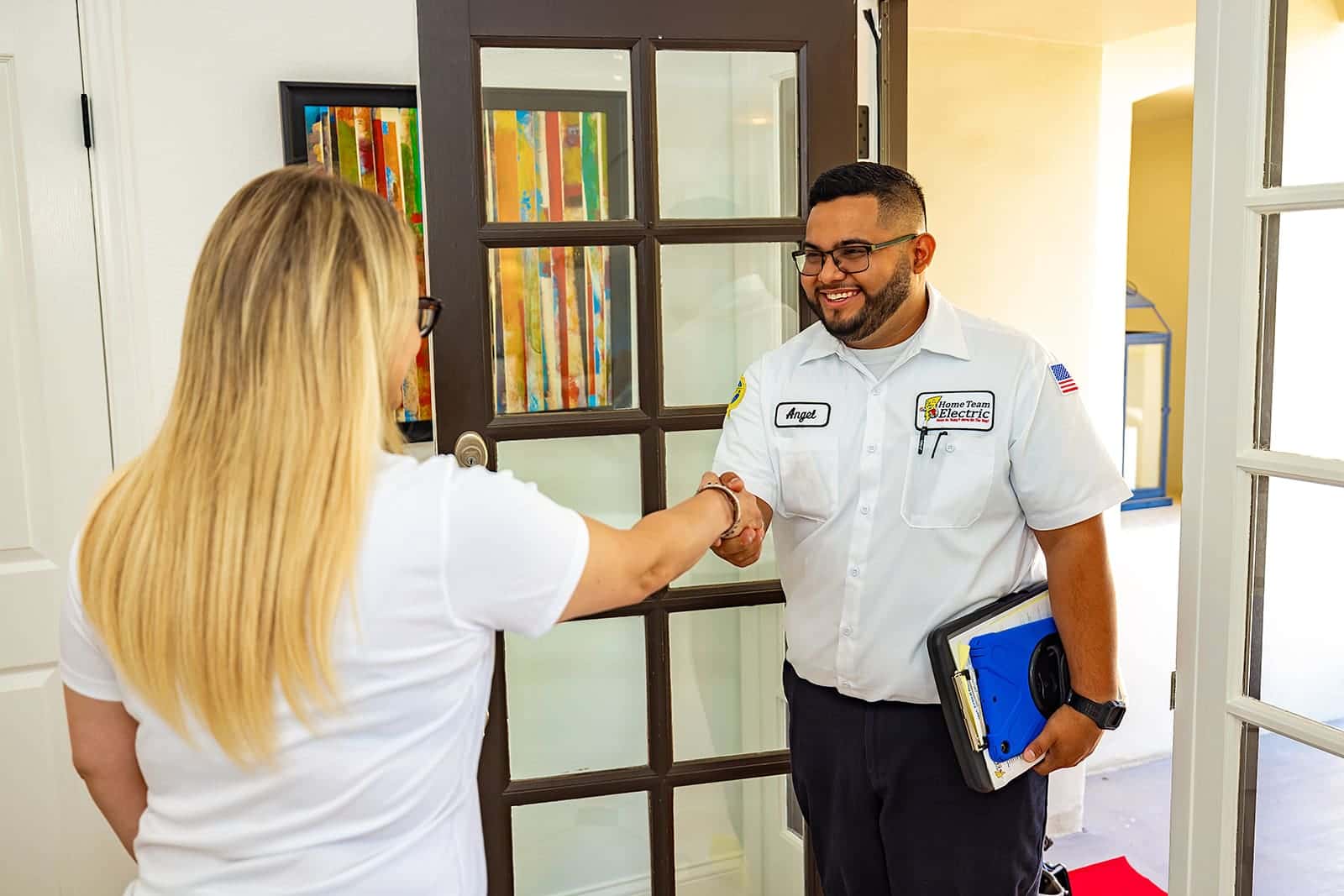
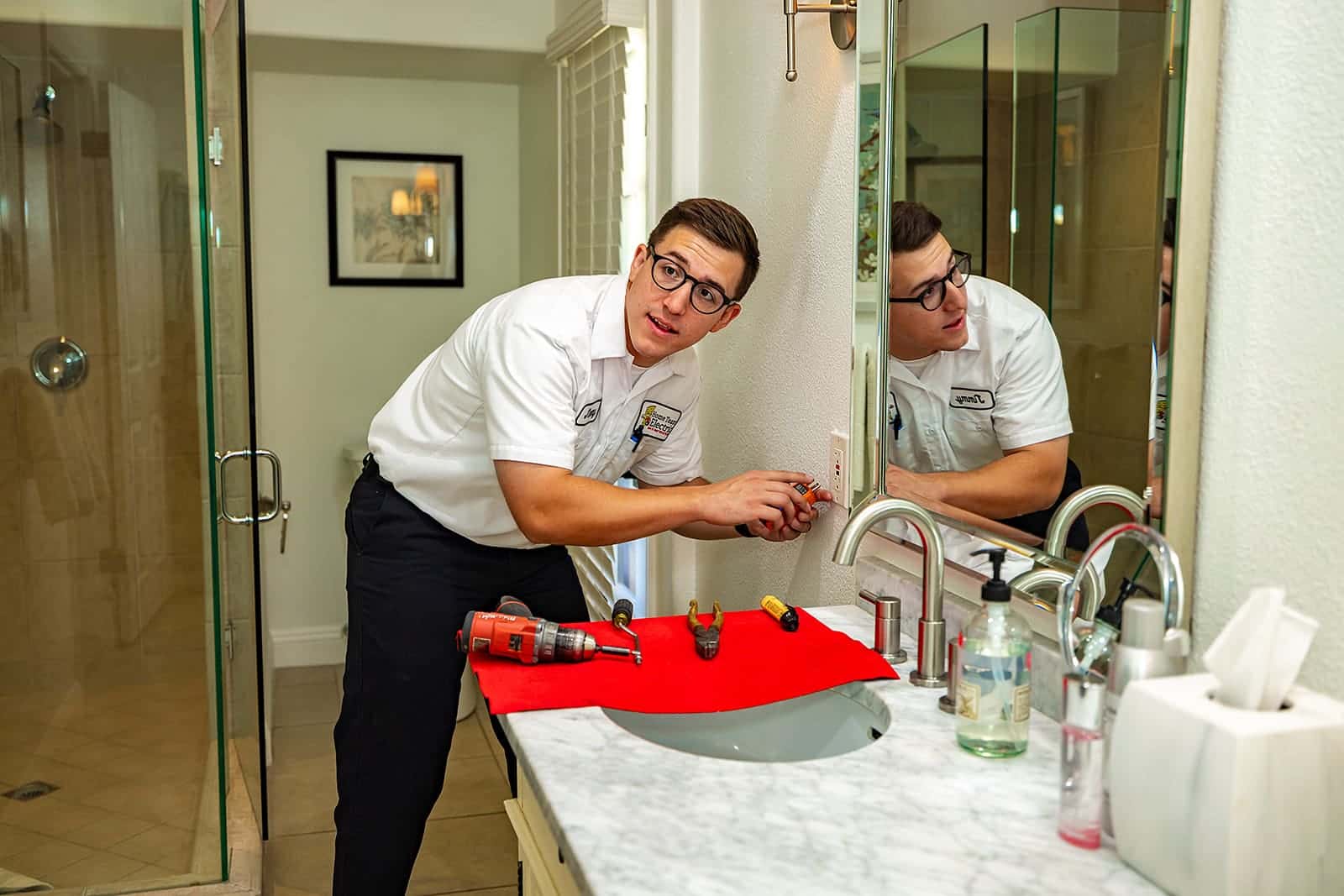
An electrician from Home Team Electric on a residential job in the Coachella Valley and Morongo Basin

Standard Installation

Backed by Home Team Electric

Backed by Home Team Electric

Alarms placed and powered correctly across every level and sleeping area, tested and verified before we leave. The workmanship behind the install is ours, not the manufacturer's. If our work doesn't hold up, we make it right.

1 verification that every alarm tests and sounds correctly before we leave.
Most Protection

Whole-Home Interconnected

Lifetime Workmanship Guarantee

Backed by Home Team Electric

Hardwired, interconnected coverage so every alarm sounds together the moment any one detects CO. Backed by Home Team Electric, and the coverage stays with the home. A leak anywhere wakes everyone, everywhere, with no expiration on the workmanship.

1 full-home test confirming every alarm triggers the whole interconnected set.

Combined Smoke + CO

Backed by Home Team Electric

Backed by Home Team Electric

Combination smoke and CO alarms installed where the layout calls for both, cutting the number of ceiling devices while covering both hazards. The same Home Team Electric workmanship stands behind every unit and every connection.

1 test of both the smoke and CO functions on every combination unit.

Alarms aren't install-it-and-forget-it. The sensor ages, and a unit past its date can look fine while protecting nothing.

CO alarm sensors degrade over the years, and most units carry a printed replacement date for exactly that reason. A test button confirms the alarm has power, not that the sensor still detects CO. That's why annual testing and date checks matter, and why we verify expiration dates as part of the work and again at every maintenance visit.

The Difference Most Miss

Your Workmanship Guarantee Transfers With the Home

Most warranties end the moment ownership changes. The Lifetime Workmanship Guarantee transfers to the next homeowner, so the protection follows the home instead of expiring at the sale. The next family inherits the same coverage on the work that you had, with no expiration on the workmanship behind it.

An electrician from Home Team Electric on a residential job in the Coachella Valley and Morongo Basin

Lifetime

Workmanship coverage that follows the home, not the owner

Call 760-248-8709 and talk to a real person.

Start to Finish

We Handle the Entire Job

A proper CO alarm installation isn't just mounting a device. It's mapping the right locations, wiring and interconnecting where the home allows, and documenting the work so it holds up later. That sounds like a lot to manage. The good news is you don't manage any of it. We do.

Mapped to Your Home

Placement & Coverage Plan

Where alarms go matters as much as how many you have. We map every level and sleeping area against your fuel-burning appliances and attached garage.

Code and safe practice call for CO alarms on every level and near each sleeping area, kept clear of dead-air corners and the wrong distance from appliances. An electrician walks the home and builds the placement plan, so coverage matches how your home is actually laid out and where the real risk sits. No blind spots left to chance.

Wired to Code

Wiring & Interconnection

Hardwired, interconnected alarms with battery backup are the standard we install wherever the home allows it.

We wire alarms into the home's power, add battery backup so detection survives an outage, and interconnect them so any one alarm sets off all of them. Where the structure won't support new wiring, we explain the best available option for that home. Every connection meets California Electrical Code and current NEC standards, done by a licensed contractor, not a handyman.

Handled By Our Team

Testing & Documentation

Every alarm is tested, every replacement date is verified, and the work is written down before we leave.

We confirm each alarm powers up, sounds, and triggers the interconnected set, and we verify the manufacture and replacement dates on every unit. Then we document the installation and the placement so you, a future buyer, or an inspector can see exactly what was done. A documented install is the version that holds up at sale and at claim time. That's the version we hand you.

An electrician from Home Team Electric on a residential job in the Coachella Valley and Morongo Basin

Keeps You Protected

What Every Annual Maintenance Visit Includes

The installation is the start. Alarms age and sensors fade, so the yearly check is what keeps the protection real instead of just present. Here's exactly what we test, every visit.

  • Every CO alarm tested for power, response, and correct operation
  • Interconnection verified so all alarms still sound together
  • Manufacture and replacement dates checked on every unit
  • Battery backup tested and replaced where needed
  • Combination smoke and CO units tested on both functions
  • Placement reviewed against any changes to the home or its appliances
  • Any unit past its replacement date flagged and scheduled for replacement

Every visit is performed by an electrician and documented on a signed checklist, to NEC and Home Team Electric standards. Nothing is taken on faith. It's written down.

The placement plan, the wiring, the interconnection, the testing, and the yearly care. You don't manage any of it. Book the $99 service call and we'll handle the whole job from here.

REAL RESULTS

What homeowners across the Coachella Valley and Morongo Basin say about Home Team Electric.

“Mike from Home Team Electric showed up on time and took his time to inspect and explain to me the issues and the various options with my electrical panel and failed main breaker. He was courteous, friendly and knowledgeable, and answered all my questions. Great service!”

E
Eric George

“I couldn’t be more impressed! He was incredibly nice, very professional, and clearly knowledgeable. From start to finish, he handled everything with care and efficiency. Best of all, he was able to get our electricity back up and running quickly, which was such a relief. I...”Read the full review

C
Cynthia Bernardez

“We had another great experience with Home Team Electric! Gio and Angel came out to help us with some garage lights, label our electrical panel, and do a safety check of our home. They also installed some new smoke alarms for us. They were both really friendly, professional, and...”Read the full review

A
Anderson Mobile Detail

“Mike, David and the Home Team crew did an exceptional job on our reroofing project. They coordinated with the roofing company to remove old and unnecessary conduit from the roof before the roofers sprayed new foam, then came back and set up an updated system to our specifics...”Read the full review

j
j dangle

“The team at Home Team Electric was fantastic to deal with. We had a late night emergency at our home and the technician they sent over was very knowledgable and was able to get our problem solved. Highly recommend this company!”

K
Kristen

“You won’t be disappointed dealing with home team. Carlos, David, Oscar, Brett, Angel came out and did the entire house in one day. They worked hard and in the end it was definitely worth it as the house’s electricity is working top-notch right now and the lights are brighter. I...”Read the full review

N
Nicholas Novosel III

“Josh inspected my electrical system. He was very thorough and patient as he went through everything, very pleasant and friendly. He left me with an understanding of what I need and what my options are. I’m very satisfied with his service and professionalism.”

S
Susan Ballazhi

“Their Awesome ,The very Best, Great we couldn’t be happier with the service and your ELECTRICIANS Angel D. and Angel B. They installed a portable generator backup system for our home .”

D
Diana Whelan

“Carlos was great. We loved working with him!”

G
Garyztwo

“We were looking into the possibility of installing a generator. Mike was knowledgeable and was able to explain what the process involved, as we have solar and a back-up battery.”

L
Lisa Mess
16,000+

Homeowners Served

See what homeowners across the Coachella Valley and Morongo Basin are saying about our work.

Read All Reviews

Our Process

Here is What Happens When You Call

No surprises. Every job follows the same steps, since 2006.

1

Safety Confirmation and Baseline Evaluation

Our electrician first confirms there is no active carbon monoxide event in your home. Once the home is clear, we run a baseline evaluation of the involved circuits and the panel feeding them, protecting safety and our workmanship guarantee.

2

Full Alarm System Assessment

Every alarm gets pulled down and inspected. We check the expiration date, confirm placement meets California requirements, and inspect the wiring behind each unit. You will know before any work begins what needs attention.

3

Connection Rebuild, Harness Replacement, and Installation

The junction box gets a full Lifetime Connection Standard rebuild with premium connectors, a brand-new wiring harness, and a fresh mounting bracket. The new unit is installed and the install and replacement dates are recorded.

4

System Test and Homeowner Walkthrough

Every alarm sounds and every unit communicates on the communication line. Once the interconnected network is confirmed working, we walk you through the indicator lights, how to silence an alarm, and how to test monthly.

5

Guaranteed Pricing and Your Decision

Our $99 service fee covers evaluation, your available options, and guaranteed pricing before any work begins. We present your options and every decision belongs to you. No pressure, no hidden costs.

Home Team Electric electrician on a service call

Pro tip: Most carbon monoxide alarm installation projects are completed in a single visit. For larger jobs, you get a realistic timeline during the evaluation, before anything is scheduled.

Dependable

Built to last, backed by our promise

Problems don't care what time it is. Home Team Electric has been there for the Coachella Valley and Morongo Basin families since 2006, and we stand behind every job we do. Financing available on approved credit so you can get the work done when you need it.

2006
Serving the Desert
Since
4.9
Google
Rating

Get In Touch

Contact our team

Serving the Coachella Valley and Morongo Basin since 2006. Same-day service, and after-hours emergency service at $289. Real people answer the phone. • 72091 Woburn Ct Ste A, Thousand Palms, CA 92276 • 760-248-8709 • info@hometeamelectric.com

$99
Service Call
Written Price Before Any Work Begins

Frequently Asked Questions

Common questions about carbon monoxide alarm installation

How Does Living in This Desert Change the Way You Evaluate a Home’s Electrical System?

It changes the evaluation from the start. Coachella Valley summers regularly climb past 115 degrees, and Morongo Basin day-to-night swings can exceed 40 degrees, cycling expansion and contraction through every connection. So symptoms get read against the home's age, construction era, and load history, not just the breaker that tripped.

What Protections Do I Have If Something Goes Wrong After the Job?

Two guarantees with proof behind them. The 100% Satisfaction Guarantee means if the work does not meet your expectations, we make it right. The Lifetime Workmanship Guarantee means we fix workmanship failures at no charge, and the coverage stays with the home if you sell it. Behind both: California C-10 Electrical Contractor License #879507 and a $1,000,000 per-occurrence liability policy.

Why Does Home Team Electric Only Work on Residential Homes?

Because residential electrical work is a specialty, not a side category. Most contractors split time between construction, commercial buildings, and residential calls. Home Team Electric chose one focus in 2006: the electrical systems inside homes across the Coachella Valley and Morongo Basin. Decades inside thousands of desert homes builds pattern recognition no generalist schedule can produce.

Who Is Home Team Electric, and Who Will Actually Be in My Home?

Home Team Electric is a residential-only electrical contractor serving the Coachella Valley and Morongo Basin since 2006. The person at your door is a Home Team Electric electrician: drug tested, background checked, and professionally trained, with weekly ongoing training. The company has completed more than 25,000 residential projects, with a 4.9 Google rating and 16,000+ homeowners served.

Do I Need GFCI (Shock Prevention) Protection by the Pool and Spa?

Yes. Code requires GFCI (shock prevention) protection for pool and spa equipment, nearby receptacles, and underwater lighting, and the requirement exists because water and electricity meet here on purpose. Many desert pools predate today's requirements and run unprotected. If you do not know whether yours is protected, that is exactly what the evaluation answers.

When Does an Older Desert Home Need Rewiring?

Rewiring is warranted when the wiring itself, not just a device, has aged past safety: brittle or damaged insulation, ungrounded two-wire circuits, aluminum branch wiring, or repeated faults across different circuits. Desert attics bake wiring insulation for decades. An evaluation maps which circuits actually need work, because most older homes need targeted rewiring, not a whole-home gut.

What Does Whole-Home Surge Protection Actually Protect?

A whole-home surge protector at the panel clamps voltage spikes before they reach your circuits, protecting everything plugged in: AC systems, appliances, EV chargers, and electronics. In the desert, monsoon lightning, grid switching, and your own large motors all generate surges. Plug strips alone protect single devices. The panel unit protects the home.

Still Need Help?

Our team is ready to answer your questions about electrical services.