
How Do I Know If My Electrical Panel Needs to Be Replaced?
The clearest signs are repeated breaker trips during ordinary use, a panel that feels warm, a burning smell near the panel, lights that dim when large appliances start, and a panel brand with a documented safety history. In desert homes these signs arrive earlier because sustained heat ages panels faster. Any one of them is worth a licensed evaluation.
The Desert Context
Why desert panels age faster than the calendar says
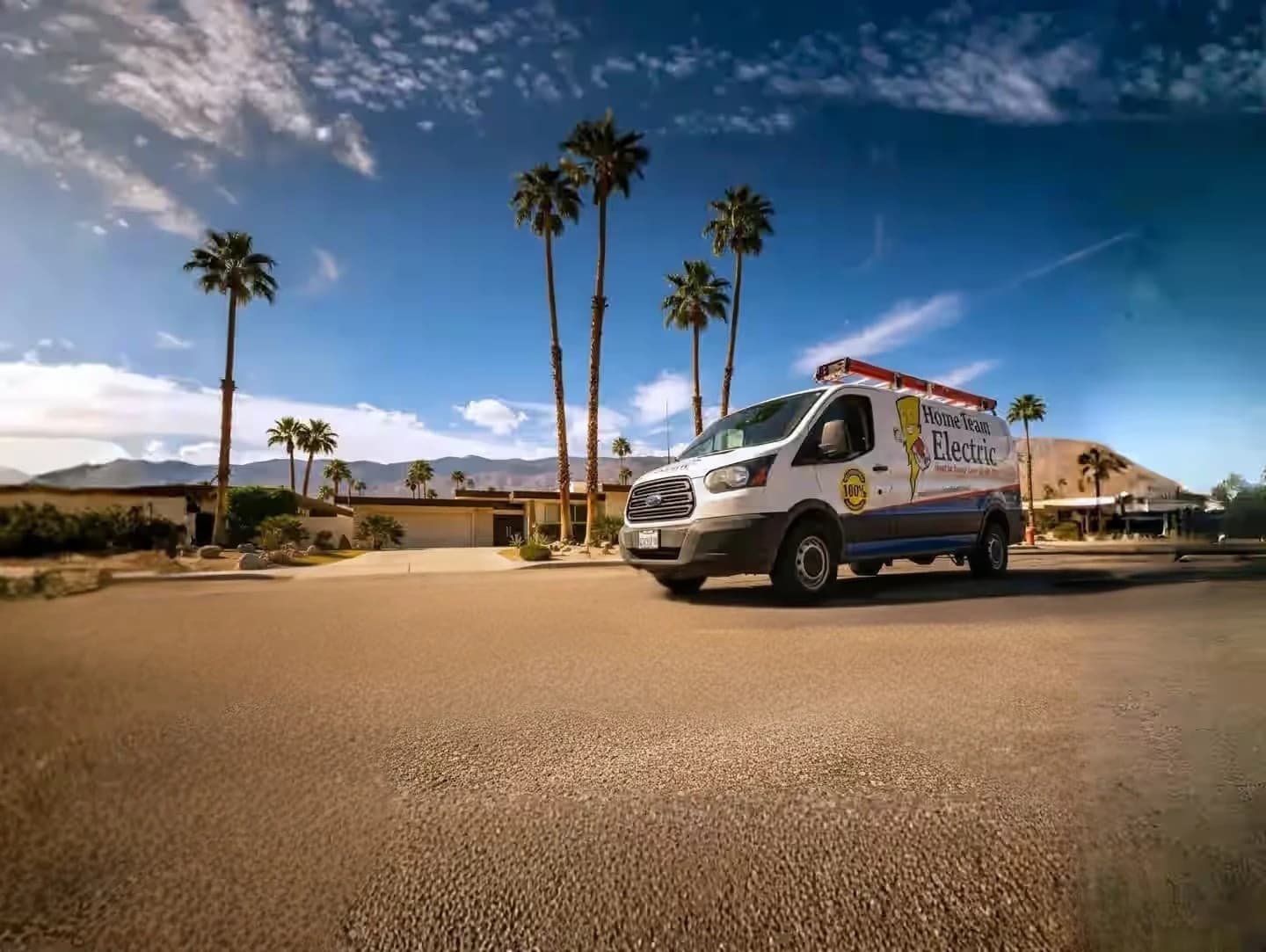
Home Team Electric has evaluated electrical panels across the Coachella Valley and Morongo Basin since 2006. The pattern we see is consistent: a panel that was correctly sized when the home was built can be genuinely undersized and genuinely tired twenty years later, because the desert worked it harder than the manufacturer ever planned for.
A panel that runs under sustained summer heat for six months a year has lived more thermal cycles by year ten than a mild-climate panel sees in twenty.
Age is not the whole story
Two panels of the same age can be in very different shape. What matters is the brand, the load history, the connection condition, and how much heat it has absorbed. That is why the answer comes from pulling the cover, not from reading the install date.
Written By
Frank Luersen
Owner and Founder, Home Team Electric
California C-10 Electrical Contractor License #879507, with 28 years of residential electrical experience serving the Coachella Valley and Morongo Basin.
Last Updated: August 2026
The Real Signals
The Signs a Panel Is Asking for Attention
Most panels give warning before they fail. These are the signals we take seriously on every desert evaluation.
- 01
Breakers that trip during normal use
A breaker that trips under an unusual load is doing its job. One that trips during ordinary daily use is telling you the circuit, the breaker, or the panel is at its limit. Ignoring it overheats the wiring behind the wall.
- 02
Warmth, smells, or sounds at the panel
The panel should be cool, quiet, and odorless. Warmth means resistance somewhere inside. A hot, fishy, or burnt-plastic smell means insulation is already being damaged. Buzzing or crackling means arcing. None of these wait well.
- 03
A brand with a documented safety history
Zinsco and Federal Pacific panels have known failure modes, and insurers in California increasingly decline coverage on homes still running them. If your panel door shows those names or the signature colored breaker handles, it has earned an evaluation regardless of symptoms.
- 04
New loads the original design never planned for
An EV charger, a casita, a pool, a spa, or a second AC system all add demand. A panel that is full, or one leaning on double-tapped breakers for capacity, is telling you the home outgrew it.
A panel upgrade is warranted when the system draws more than the panel was designed to divide and protect safely. The evaluation tells you whether that is your home.
Know the Difference
Repair, Monitor, or Replace
Not every aging panel needs replacement this year. Here is how the honest triage usually lands.
- An occasional trip under a genuinely heavy load.
- A clean, cool, quiet panel from a reputable brand with spare capacity.
- A panel that passed its last evaluation with tight connections.
- Trips during ordinary daily use, or the same circuit tripping repeatedly.
- Any warmth, smell, or sound at the panel.
- A Zinsco or Federal Pacific label, or a fuse box still in service.
Desert homeowners sometimes accept a tired panel as part of summer life. It should not be accepted. It should be evaluated.
Stop and Make the Call
Call an Electrician Immediately If
- You smell burning or see scorch marks at the panel.
- The panel or a breaker is hot to the touch.
- A breaker trips again the instant you reset it.
- You hear buzzing, crackling, or sizzling from inside the enclosure.
These are active-fault signs, not maintenance items. Cut the affected circuit if you can reach the breaker safely, keep flammables clear, and call.
What to Expect
What to Expect During a Panel Evaluation
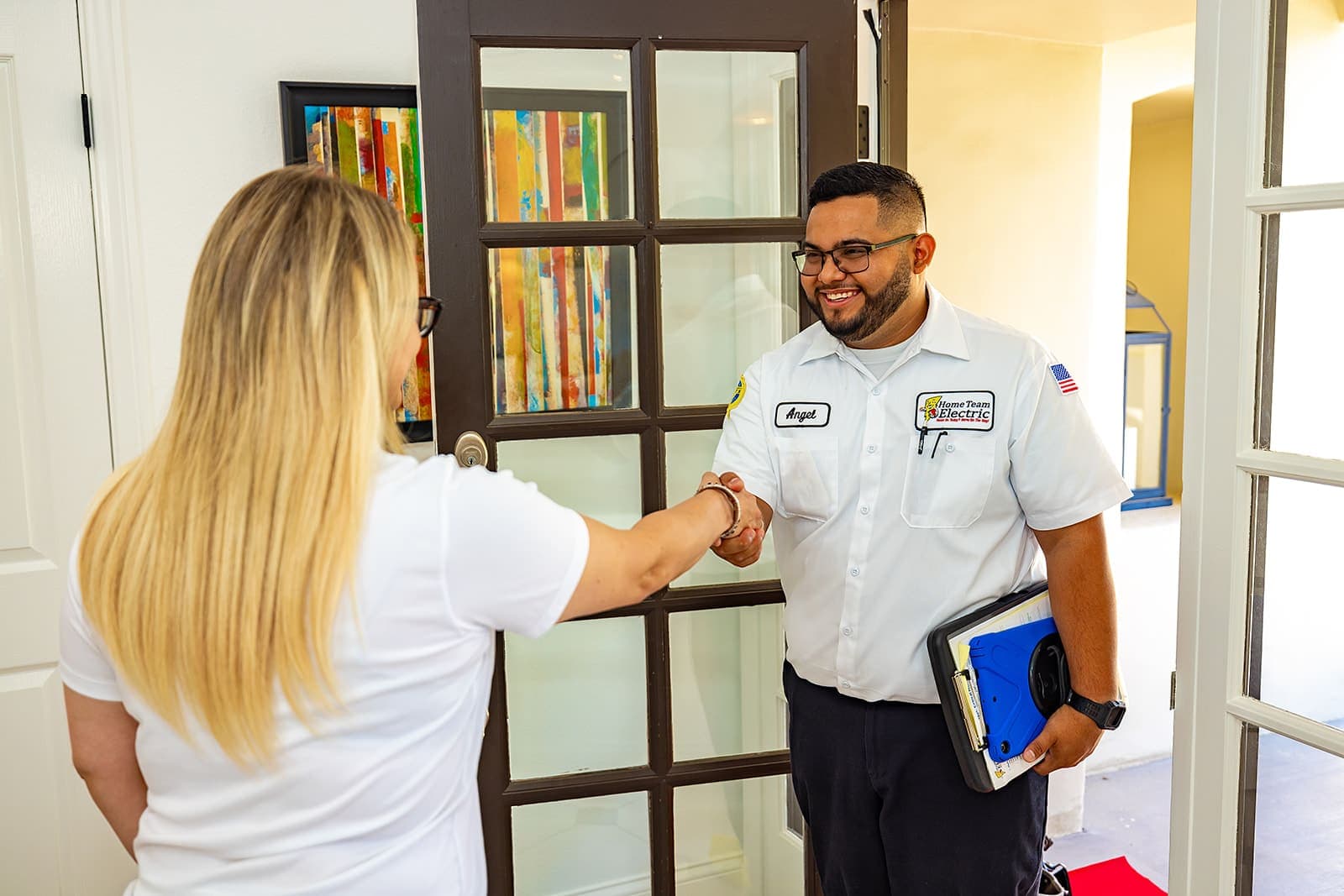
A panel evaluation is a diagnostic visit, not a sales visit. If an upgrade is warranted, we tell you why. If it is not, we tell you that too.
- 01
The cover comes off and the true condition gets read.
Bus bars, breaker seats, and terminations get inspected directly. Desert heat damage is rarely visible from the outside of the door.
- 02
Connection tightness is checked at every terminal.
Thermal cycling from Coachella Valley summers loosens connections at a rate cooler climates do not produce. This check is standard on every Home Team Electric evaluation.
- 03
A load calculation maps what your home actually runs.
The panel gets judged against your real July, not a generic chart: AC, pool, spa, kitchen, laundry, and anything you plan to add.
- 04
You get the findings and the price in writing.
Plain language, no pressure, and guaranteed pricing before any work begins. Every installation is backed by the Lifetime Workmanship Guarantee, transferable to the next homeowner.
Backed by the Work
Certified Expertise and a Fully Stocked Truck
A service fee covers the visit and a fully stocked truck. Our team includes certified residential specialists, electricians in training, and apprentices, and a certified electrician leads or oversees the work in your home. That standard is built on verified field experience, formal technical education, rigorous testing, and ongoing training (weekly classroom training in our own training room). Pricing is presented in full and approved before any work begins. Same-day service available.
- California C-10 Electrical Contractor License #879507. Verify it at cslb.ca.gov.
- Home Team Electric works exclusively on residential electrical systems in desert conditions. All work is code-compliant and backed by our Lifetime Workmanship Guarantee.
Find out what shape your panel is really in.
Book a service call with an electrician who works desert homes every day.
Google Search
Get more of our updates on Google
If our work has been helpful, add us as a preferred source: Google will show more of our updates in your Top Stories and AI results. It only changes what you see.
Add as Preferred Source