

Can My Panel Handle a Level 2 EV Charger?
It depends on the panel's capacity and what already runs on it. A Level 2 EV charger is a large continuous load, and in desert homes the panel is already working hard against air conditioning for half the year. A load calculation tells you whether your panel can carry it, needs a derate, or needs an upgrade first.
The Desert Context
Why EV charging hits desert panels harder
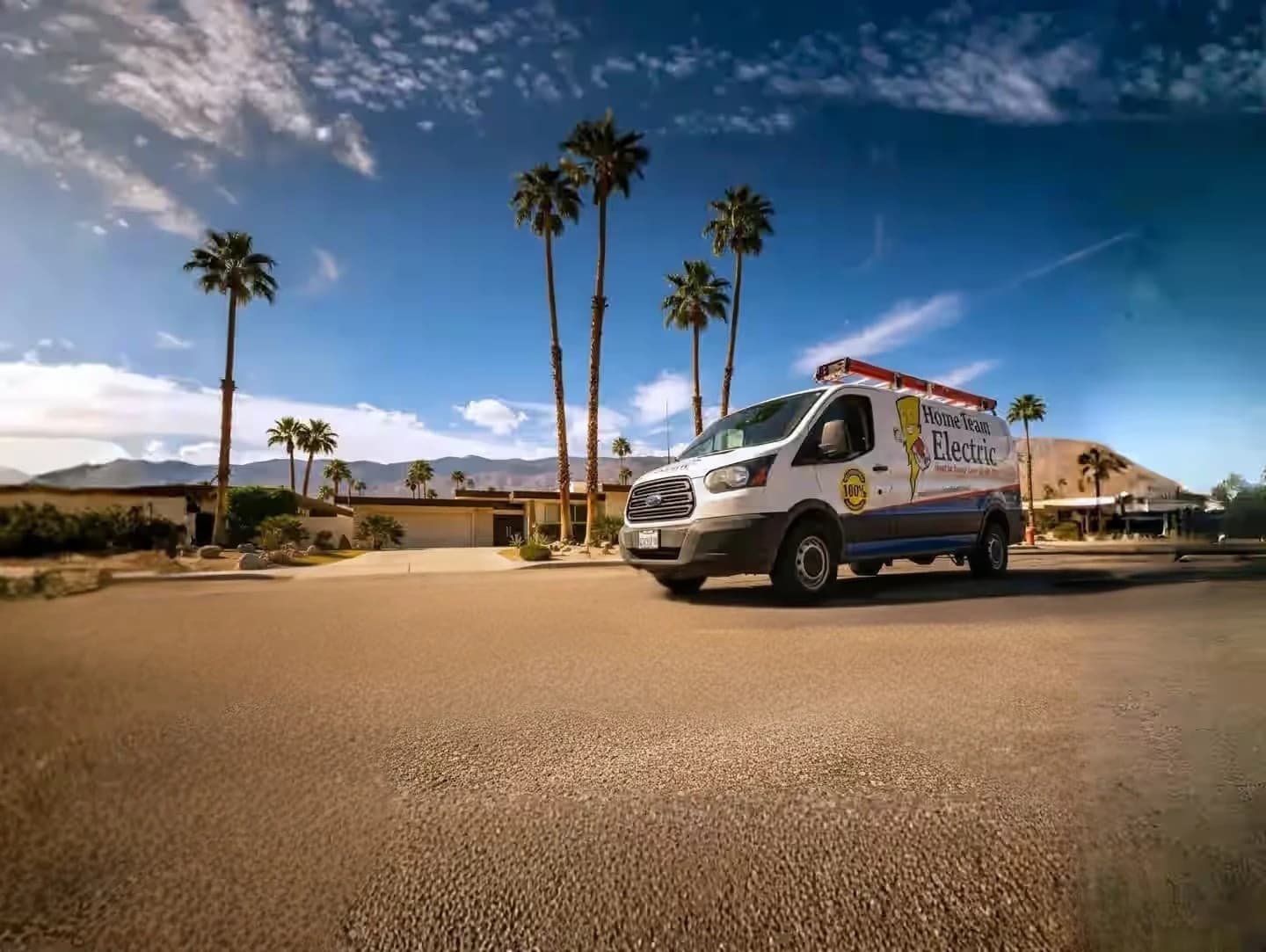
Home Team Electric has installed EV charging in homes across the Coachella Valley and Morongo Basin since the first wave of EVs arrived in the desert. The question we hear most is not which charger to buy. It is whether the home's electrical system can carry one. In a climate where air conditioning runs six months a year, that question deserves a real answer, not a guess.
A Level 2 EV charger can draw as much sustained current as a central air conditioner. Your panel has to carry both at once on a July night.
Charging happens at the worst time of day
Most homeowners charge overnight, which is exactly when desert air conditioning is still pulling hard against 90-degree evenings. The charger and the AC stack on top of each other for hours. That is why the answer comes from a load calculation for your specific home, not from a chart.
Written By
Frank Luersen
Owner and Founder, Home Team Electric
California C-10 Electrical Contractor License #879507, with 28 years of residential electrical experience serving the Coachella Valley and Morongo Basin.
Last Updated: August 2026
What Decides It
What Determines Whether Your Panel Can Carry a Charger
Three things decide the answer, and all three get measured during the evaluation.
- 01
The panel's rated capacity
For most desert homes adding electric loads, 200-amp service is the practical floor. A 100-amp panel can sometimes carry a charger with a load-management device or a main breaker derate, but air conditioning, a pool pump, and a charger together can approach its limit on a hot afternoon.
- 02
What already runs on the system
A second AC system, a casita, a spa, or a pool pump all claim capacity before the charger arrives. The load calculation adds up what your household actually runs in July, not what a generic chart assumes.
- 03
The panel's age and condition
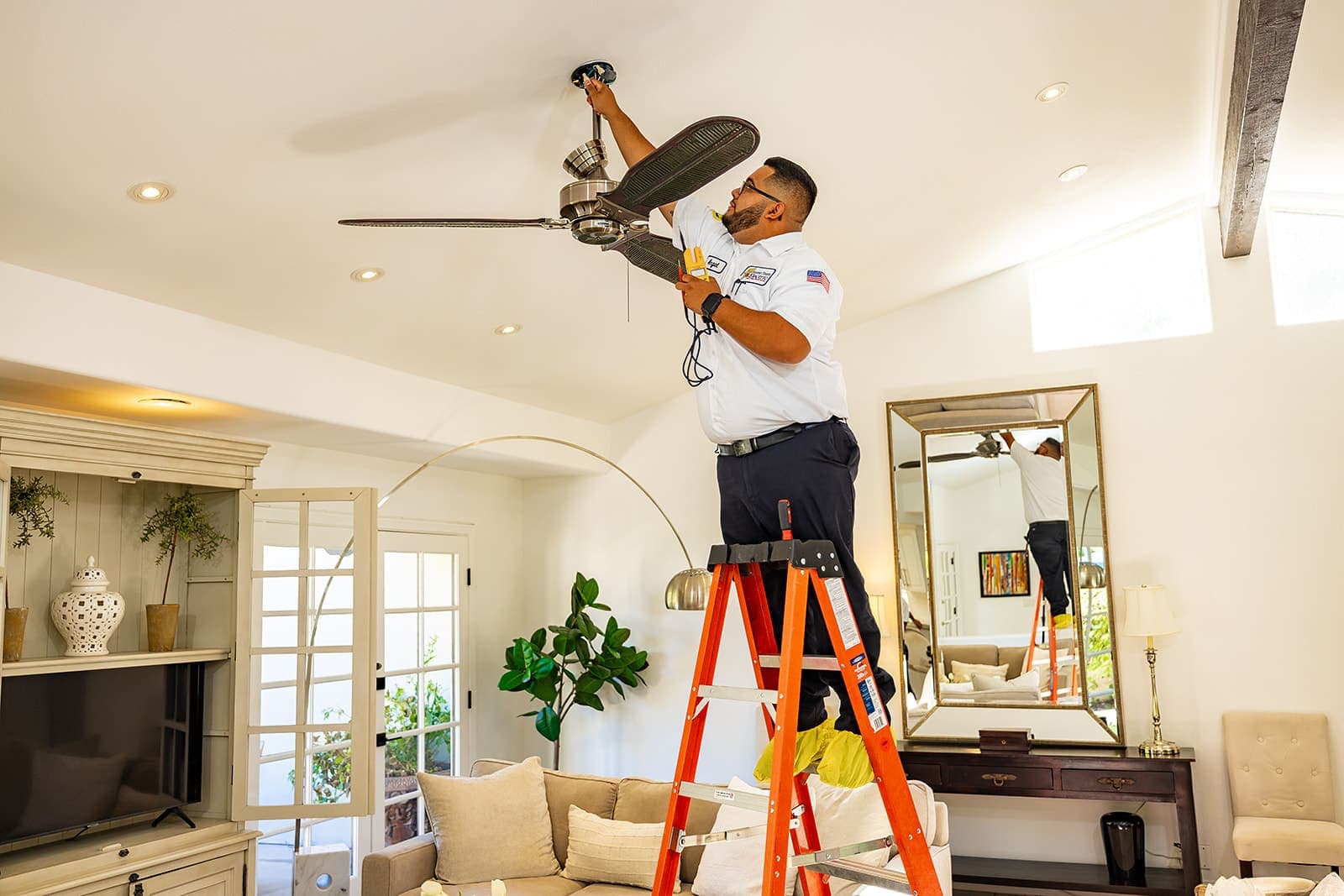
Desert thermal cycling loosens connections and ages breakers faster than mild climates. A panel that is technically big enough but physically tired is not a safe place to land a new continuous load. Condition gets checked, not assumed.
The right answer is not a number off a chart. It is a load calculation for your home, your equipment, and the way your household actually runs in July.
Know the Difference
What Fits and What Doesn't
Here is the honest version of how the answer usually breaks down in desert homes.
- A 200-amp panel in good condition with gas appliances and one AC system.
- A newer home wired with EV charging in mind.
- A 100-amp panel with a load-management device, in some cases.
- A full panel already running two AC systems, a pool, and a spa.
- A panel with a documented safety history, like Zinsco or Federal Pacific.
- Any panel that is already tripping breakers during normal summer use.
Installing a charger on a panel that cannot carry it does not just trip breakers. It cooks the weakest connection in the system, every night.
Stop and Make the Call
Stop and Get an Evaluation First If
- Your breakers already trip during ordinary summer use.
- Your panel is a Zinsco, Federal Pacific, or fuse-box era system.
- Lights dim noticeably every time the AC compressor starts.
- The panel or any breaker is warm to the touch.
Any of these means the system needs attention before it takes on a new continuous load. An electrician can tell you exactly where you stand.
What to Expect
What to Expect During an EV-Readiness Evaluation
The $99 service call answers the charger question with measurements, not assumptions. Here is what that looks like.
- 01
A load calculation for your actual household.
Every major load in the home gets counted: AC systems, pool and spa equipment, the kitchen, laundry, and anything else that draws hard. The charger gets added on paper before it gets added in copper.
- 02
The panel's condition gets inspected, not assumed.
Connection tightness at every terminal, breaker condition, and heat history all get checked. Desert panels age faster, and a tired panel changes the recommendation.
- 03
You get every viable path, with pricing in writing.
Sometimes that is a straightforward circuit. Sometimes it is a load-management device, a derate, or a panel upgrade first. We walk both paths with you in plain language, and you decide what fits your home.
- 04
The install is permitted, inspected, and guaranteed.
The work is code-compliant, the city inspection is handled, and the workmanship is backed by the Lifetime Workmanship Guarantee.
Backed by the Work
Certified Expertise and a Fully Stocked Truck
A service fee covers the visit and a fully stocked truck. Our team includes certified residential specialists, electricians in training, and apprentices, and a certified electrician leads or oversees the work in your home. That standard is built on verified field experience, formal technical education, rigorous testing, and ongoing training (weekly classroom training in our own training room). Pricing is presented in full and approved before any work begins. Same-day service available.
- California C-10 Electrical Contractor License #879507. Verify it at cslb.ca.gov.
- Home Team Electric works exclusively on residential electrical systems in desert conditions. All work is code-compliant and backed by our Lifetime Workmanship Guarantee.
Find out what your panel can actually carry.
Book a service call with an electrician who works desert homes every day.
Google Search
Get more of our updates on Google
If our work has been helpful, add us as a preferred source: Google will show more of our updates in your Top Stories and AI results. It only changes what you see.
Add as Preferred Source