

Why Does My Circuit Breaker Keep Tripping, Especially in Hot Weather?
A breaker trips to protect your home. Repeated tripping is most often caused by an overloaded circuit, heat stress on aging components, or an electrical fault that requires professional diagnosis. In desert homes these problems show up faster than in cooler climates. If the same breaker has tripped more than once, that pattern deserves a proper evaluation, not just a reset.
The Desert Context
Why desert homes deserve a desert-specific answer
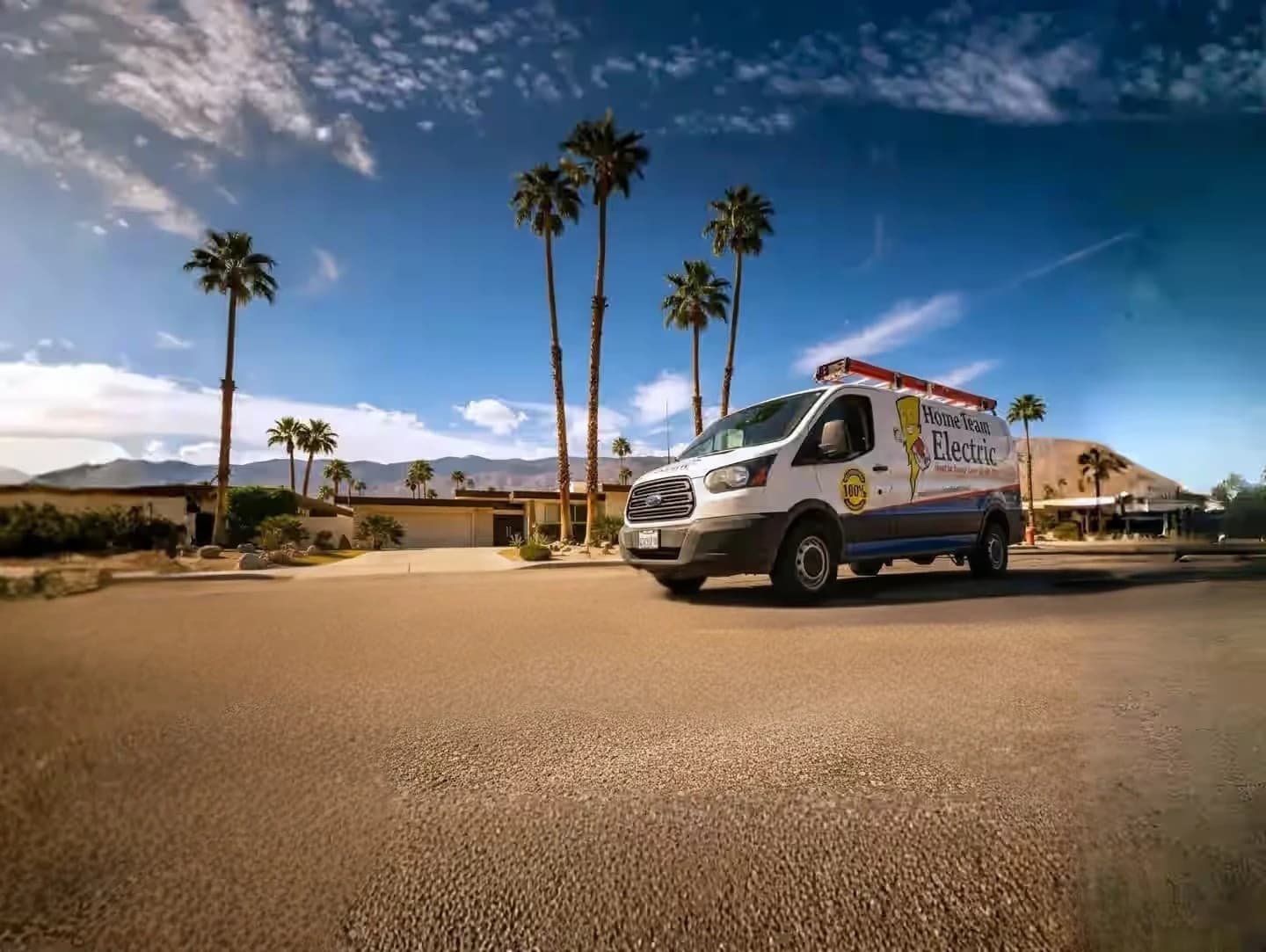
Home Team Electric is a residential-only electrical contractor serving homeowners throughout the Coachella Valley and Morongo Basin (Palm Springs, Yucca Valley, Indio, Rancho Mirage, La Quinta, and the surrounding desert communities). We have been diagnosing and repairing desert home electrical systems since 2006. Breaker trips are the most common call we get from May through October, and the causes in desert homes are specific enough to deserve their own explanation.
Circuit breakers shut off power when a circuit comes under stress. In desert homes that stress arrives more often and more quickly than most homeowners expect, because of how sustained heat affects electrical components over time.
Not every breaker trips for the same reason
Some homes also have AFCI (fire prevention) Protection and GFCI (shock prevention) Protection breakers. These can trip for reasons beyond overload (arc faults, ground faults, and moisture), and each one needs a different diagnostic approach than a standard breaker.
Written By
Frank Luersen
Owner and Founder, Home Team Electric
California C-10 Electrical Contractor License #879507, with 28 years of residential electrical experience serving the Coachella Valley and Morongo Basin.
Last Updated: August 2026
The Real Causes
The Most Common Reasons Breakers Keep Tripping in Desert Homes
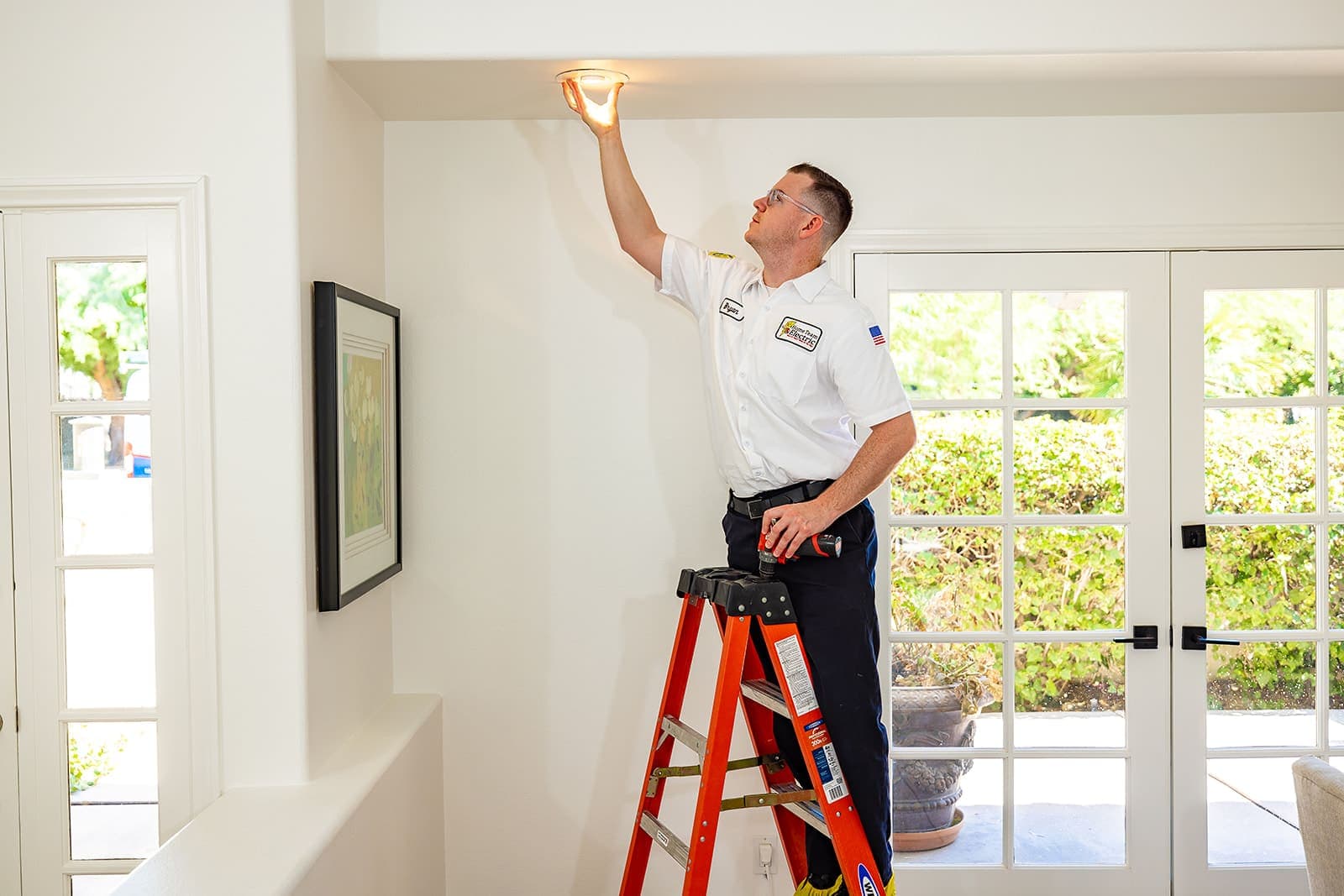
A tripping breaker almost always points to one of four causes, and in the Coachella Valley and Morongo Basin the desert climate drives most of them. Here is what we see most often in homes across the desert.
- 01
Too Much Power on a Single Circuit
AC, EV charging, home offices, and modern appliances all compete for capacity on circuits sized for an earlier era. In desert homes running AC six months a year, that load runs at a level systems outside the desert never see. Even with dedicated circuits, cumulative demand exposes the weaker points, so a circuit that was reliable for years can start tripping the moment a second appliance, a new charger, or an aging breaker hits its limit. Planning to add an EV charger? Learn what your panel needs first.
- 02
Heat Buildup Inside Desert Panels
A Coachella Valley panel runs hotter and harder than one in a cooler climate. The AC load runs longer and outdoor heat pushes into service entrances and exterior enclosures, putting sustained thermal stress on parts built for intermittent heat. Sometimes the wear surfaces months later, when a homeowner resets a breaker in October even though the damage was already invisible back in July. Twenty-eight years working desert homes has taught Frank Luersen that what looks fine in March can be failing by October.
- 03
Heat-Loosened Connections
This is one of the most consistent findings we see, and one of the most missed by electricians who do not work desert conditions. Metal expands in heat and contracts in cold, every day for months, and over years that cycle loosens connections at terminals, breakers, and junctions. A loose connection creates resistance, resistance creates heat, and heat trips the breaker. Checking connection tightness at every terminal is standard on every HTE evaluation, and it is not standard industry-wide.
- 04
A Failing Breaker, Wiring Fault, or Equipment Issue
A breaker that trips right after a reset is doing its job. That is a signal, not a malfunction. Repeated or immediate tripping can mean a wiring fault, an equipment problem on the circuit, or a breaker that has aged past reliable performance. In desert conditions that aging accelerates, so a 10-year-old breaker here has taken far more thermal stress than one in a moderate climate. Proper testing is the only way to know which.
A breaker that keeps tripping is telling you something. The only way to know which cause is yours is a real evaluation, not another reset.
Know the Difference
What Is Normal and What Is Not
Not every tripped breaker is an emergency. The trick is reading the pattern. Here is how to tell a normal heavy-load trip from a circuit that is quietly telling you it has had enough.
- An occasional trip during a heavy-demand moment.
- Running the AC, the dryer, and the microwave at once on a warm afternoon. That is a real load.
- A one-time trip that resets cleanly and does not return.
- A breaker that trips repeatedly during ordinary daily use.
- A breaker that trips during the same activity every single time.
- A breaker you have learned to manage by resetting it regularly.
Desert homeowners sometimes accept repeated tripping as part of summer life. It should not be accepted. It should be diagnosed.
Stop and Make the Call
Call an Electrician Immediately If
- The breaker trips again right after you reset it.
- There is a burning smell, buzzing sound, or noticeable heat near the panel.
- Lights flicker or receptacles stop working in areas connected to the tripped breaker.
- The same breaker trips repeatedly during normal daily use, not just during heavy load.
- You have been resetting the same breaker more than once a month without having it evaluated.
Any one of these means the wiring, not just the load, needs a licensed look. An electrician can find the cause safely. Do not keep resetting it.
What to Expect
What to Expect During a Home Team Electric Breaker Evaluation
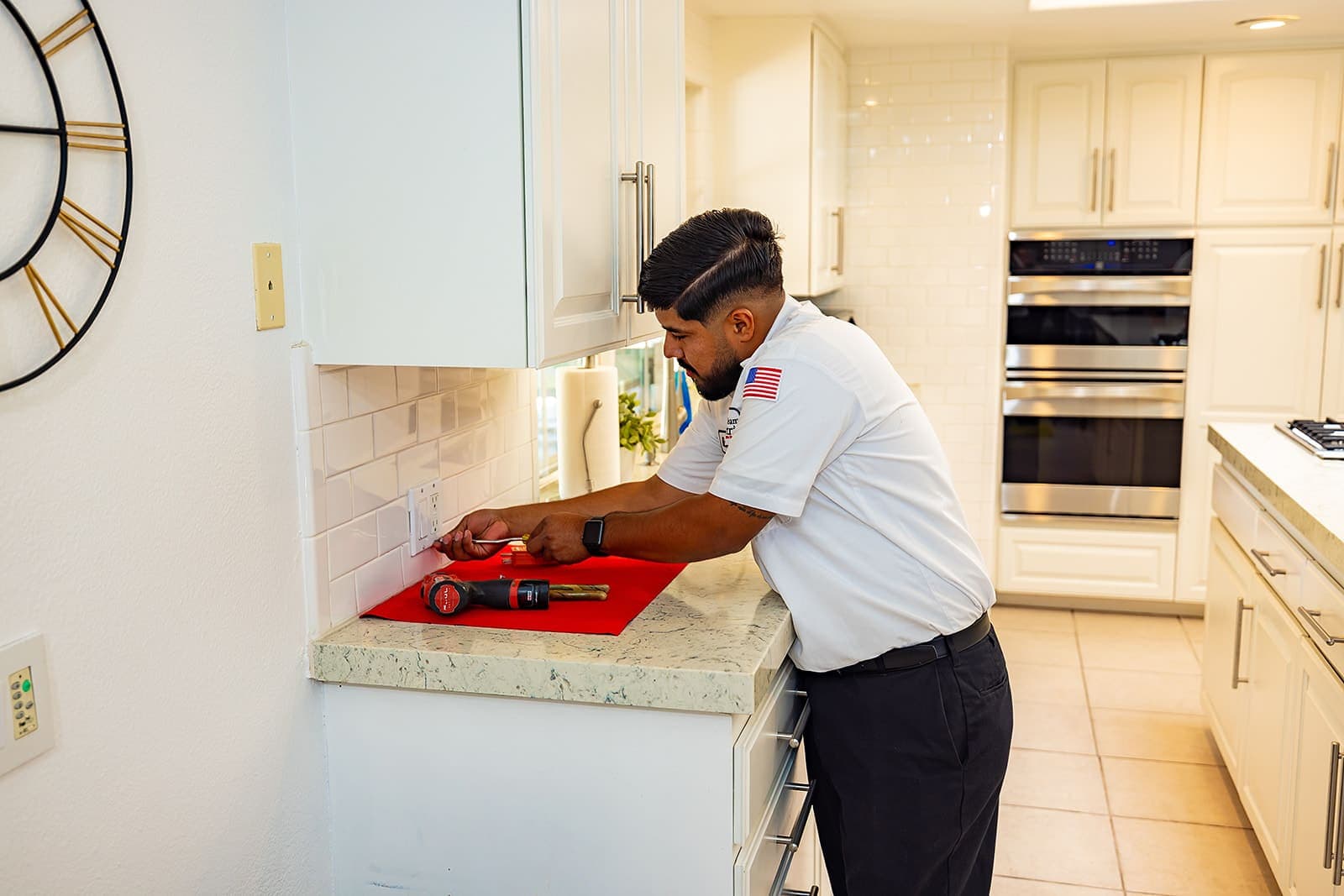
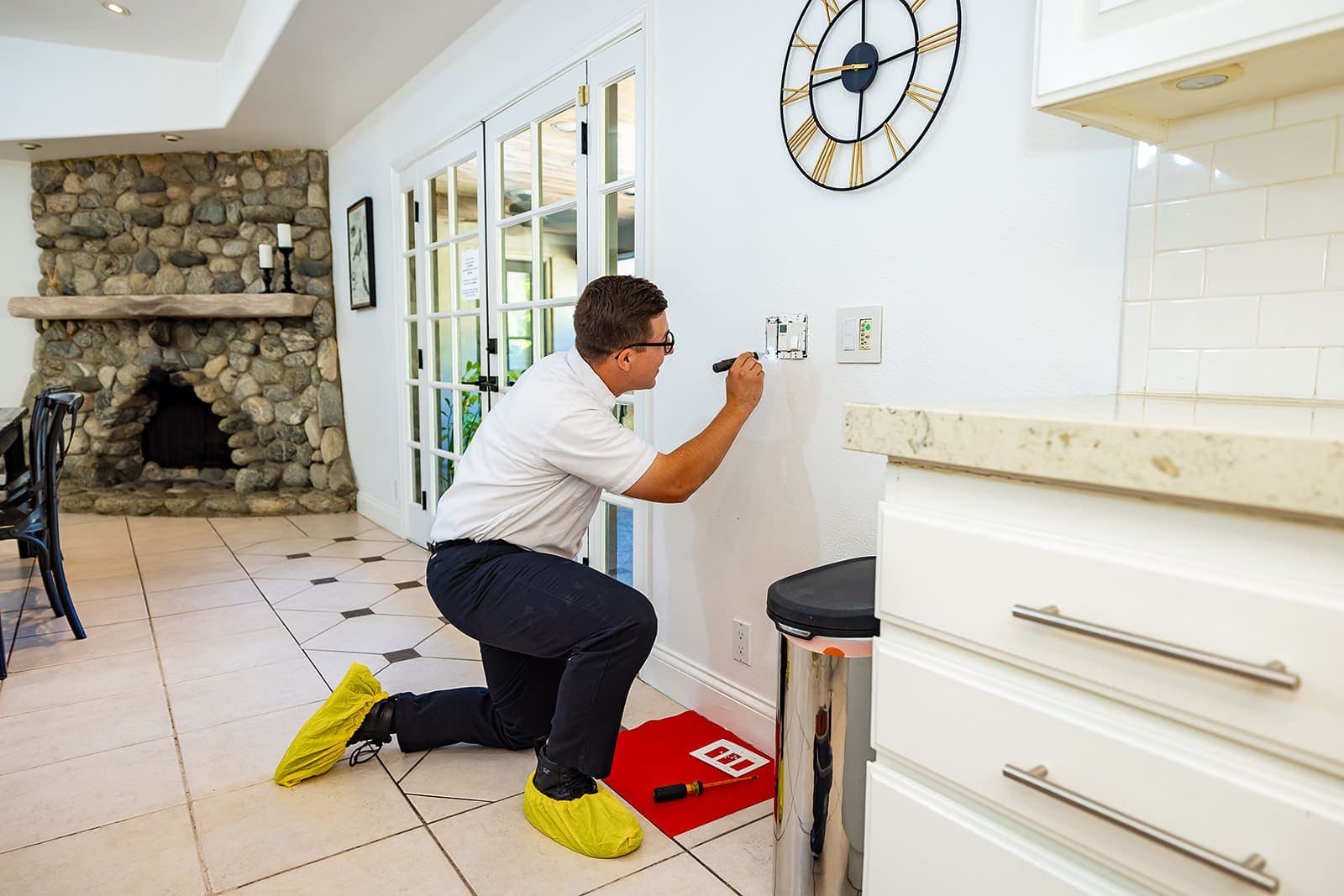
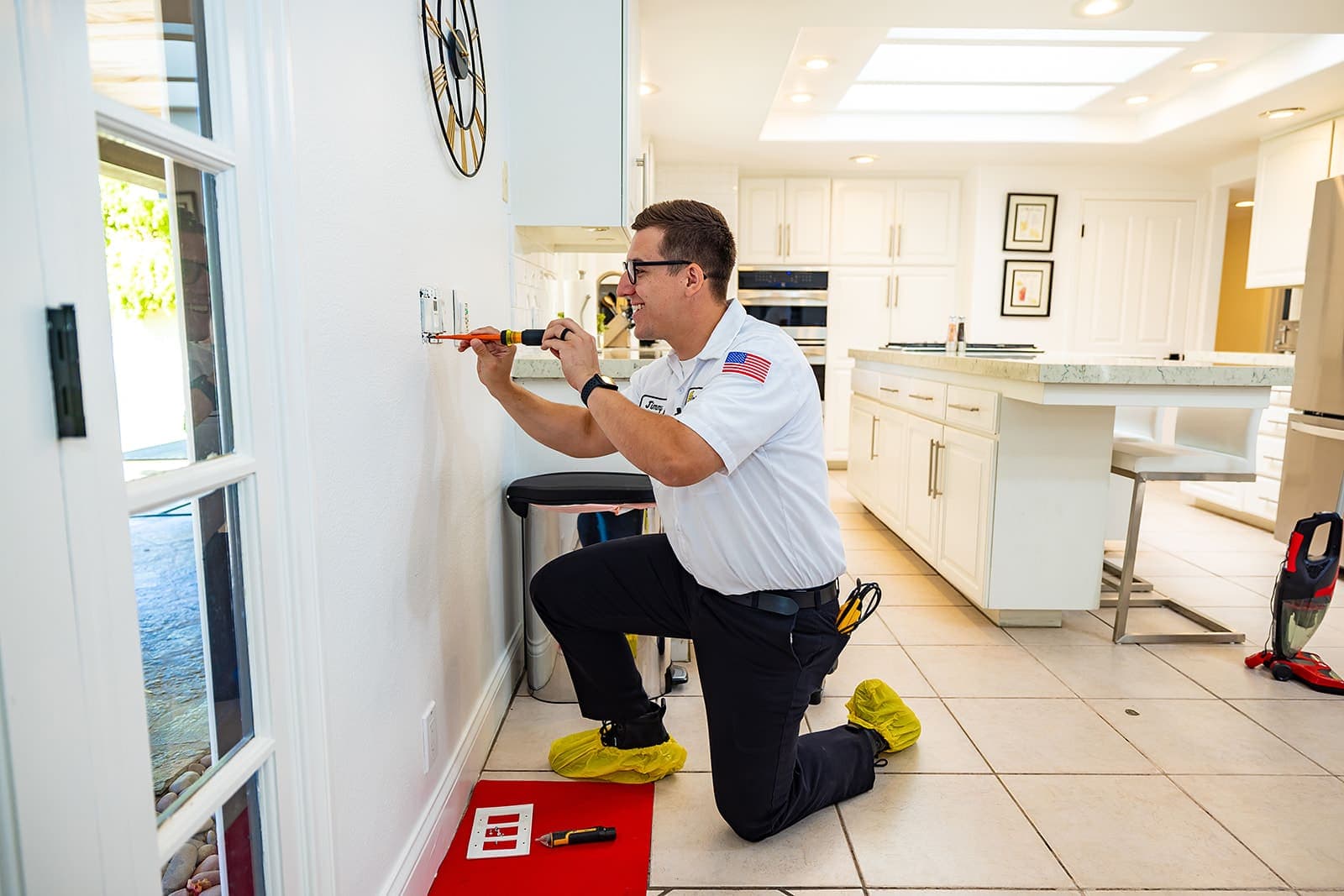
A breaker evaluation is a diagnostic process, not a parts-replacement visit. The goal is to find the actual cause, not reach for the nearest fix. Here is what that looks like when Home Team Electric comes to your home.
- 01
The full circuit is evaluated, not just the breaker.
A tripped breaker is a symptom, so we trace the whole circuit to find whether the cause is load, heat, a loose connection, a wiring fault, or the breaker itself. Replacing a breaker without diagnosing the circuit leaves the root cause in place.
- 02
Connection tightness is checked at every terminal.
Thermal cycling from Coachella Valley summers loosens connections at a rate cooler climates don't. A loose terminal that looks perfectly intact can be the resistance a voltage test won't catch, which is why we check tightness at every terminal, not just the obvious ones.
- 03
Heat impact and panel condition are assessed for desert conditions.
We're reading a system that runs under sustained thermal stress six months a year. That context changes what we look for and what we recommend, because a panel in the Coachella Valley and Morongo Basin ages differently than one in a moderate climate.
- 04
Findings are explained in plain language, with no pressure.
We tell you what we see, why it matters, and your options, then you decide. We don't recommend work that isn't warranted, and we don't frame options as emergencies unless they genuinely are.
- 05
If a panel upgrade comes up, we explain when it makes sense and when it does not.
A breaker trip does not automatically mean a panel replacement. We tell you which situation you are in and why, so the decision is based on what your system actually needs.
Backed by the Work
Certified Expertise and a Fully Stocked Truck
A service fee covers the visit and a fully stocked truck. Our team includes certified residential specialists, electricians in training, and apprentices, and a certified electrician leads or oversees the work in your home. That standard is built on verified field experience, formal technical education, rigorous testing, and ongoing training (weekly classroom training in our own training room). Pricing is presented in full and approved before any work begins. Same-day service available.
- California C-10 Electrical Contractor License #879507. Verify it at cslb.ca.gov.
- Home Team Electric works exclusively on residential electrical systems in desert conditions. All work is code-compliant and backed by our Lifetime Workmanship Guarantee.
Find out what is actually tripping your breaker.
Book a service call with an electrician who works desert homes every day.
Google Search
Get more of our updates on Google
If our work has been helpful, add us as a preferred source: Google will show more of our updates in your Top Stories and AI results. It only changes what you see.
Add as Preferred Source