
Are Zinsco and Federal Pacific Panels Really Dangerous?
Yes, the concern is real. Both brands have documented failure modes where breakers fail to trip during a fault, letting wiring overheat behind the walls. Desert heat accelerates exactly that failure. Many California insurers now decline or surcharge coverage on homes running them. If your panel shows either name, it has earned a licensed evaluation.
The Desert Context
Why these two brands come up in almost every older-home evaluation
Across the Coachella Valley and Morongo Basin, a large share of homes built from the 1960s through the early 1980s shipped with Zinsco or Federal Pacific equipment. Home Team Electric finds them constantly during evaluations in Palm Springs, Cathedral City, Indio, and the Morongo Basin communities, usually still in daily service decades past their era.
A breaker that stays engaged during a fault is not protection. It is a switch that lies to you.
How to recognize them
Zinsco panels carry the name on the door and distinctive green, red, and blue breaker handles. Federal Pacific panels say Federal Pacific Electric or FPE, usually with Stab-Lok breakers inside. If you see either, do not pull the cover yourself. The evaluation is the safe way in.
Written By
Frank Luersen
Owner and Founder, Home Team Electric
California C-10 Electrical Contractor License #879507, with 28 years of residential electrical experience serving the Coachella Valley and Morongo Basin.
Last Updated: August 2026
The Documented Problems
What Actually Goes Wrong With These Panels
This is not internet folklore. The failure modes are specific, repeatable, and made worse by desert conditions.
- 01
Breakers that fail to trip under fault
The documented failure in both brands is a breaker that stays engaged while a fault builds heat in the wiring behind the wall. The system keeps feeding the problem instead of cutting it off. That failure mode has been linked to house fires nationally.
- 02
Aluminum bus connections that loosen with heat
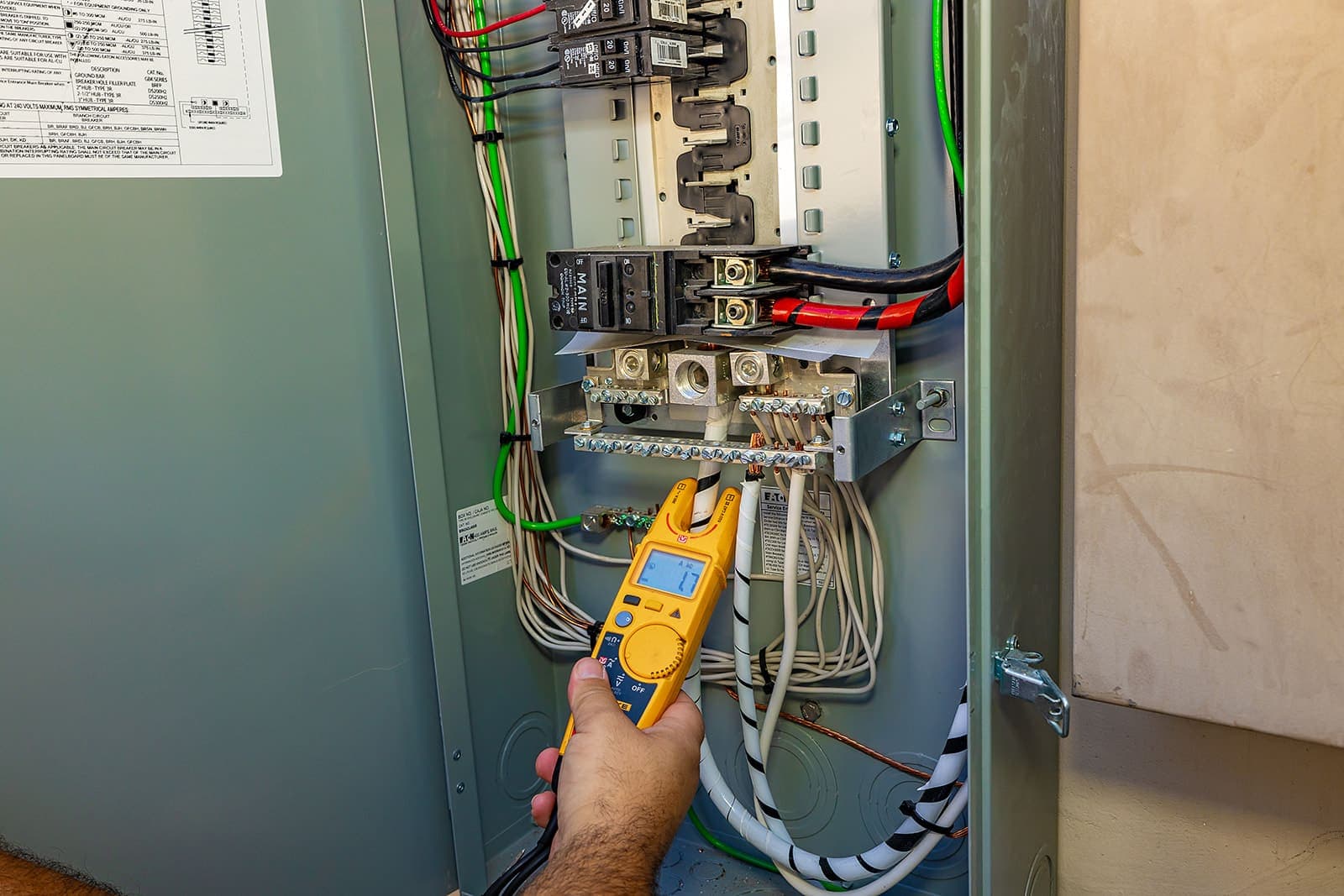
Zinsco breakers grip an aluminum bus that desert thermal cycling loosens year after year. A loose seat arcs, pits the bus, and cooks the breaker body. We see the burn marks when the cover comes off.
- 03
No path to maintain them
Replacement parts are no longer manufactured. There is no safe way to maintain these panels long term, which is why the honest recommendation is usually replacement rather than repair.
- 04
Insurance and escrow consequences
California carriers increasingly decline or surcharge coverage on homes with this equipment in service, and home inspectors flag it during purchases. For buyers, that insurance issue alone can stall financing.
If the panel cannot be trusted to cut power during a fault, every other safety device in the home is working with one hand tied.
Know the Difference
What It Means for Your Home
Owning one of these panels is not an emergency this afternoon. It is a known risk that deserves a plan.
- Book a service call to read the true condition under the cover.
- Plan the replacement on your schedule, before escrow or insurance forces it.
- Get written pricing and decide with full information.
- Waiting for symptoms from a panel whose failure mode is silence.
- Letting an insurance renewal or a home sale discover it for you.
- Swapping individual breakers in a system with no manufactured parts.
The most dangerous thing about these panels is that they usually look fine right up until they do not.
Stop and Make the Call
Treat It as Active, Not Theoretical, If
- You smell burning or a fishy odor near the panel.
- The panel hums, buzzes, or crackles.
- Breakers feel hot, or one trips and will not reset.
- Lights flicker across multiple rooms when large loads start.
On these brands, any active symptom moves the conversation from planning to now. Call and say what panel you have. We move these calls up.
What to Expect
What to Expect During a Legacy-Panel Evaluation
The evaluation reads the panel's true condition and gives you a plan you control. Here is what it covers.
- 01
Identification and condition, documented.
Brand, model era, bus condition, breaker seats, and any burn evidence get documented so you have the facts in writing, useful for insurance and escrow conversations.
- 02
The whole system gets read, not just the panel.
Grounding, bonding, GFCI (shock prevention) coverage, and the service entrance get checked, because a replacement plan should fix the system, not just swap the box.
- 03
A straight recommendation with written pricing.
If replacement is warranted, we say so and price it in writing. If it can wait, we say that too, and tell you what would change the answer.
- 04
Replacement handled end to end.
Permits, the city inspection, and utility coordination are ours to manage. The installation is backed by the Lifetime Workmanship Guarantee, transferable to the next homeowner.
Backed by the Work
Certified Expertise and a Fully Stocked Truck
A service fee covers the visit and a fully stocked truck. Our team includes certified electricians, electricians in training, apprentices, and helpers, and a certified electrician leads or oversees the work in your home. That standard is built on verified field experience, formal technical education, rigorous testing, and ongoing training (weekly classroom training in our own training room). Pricing is presented in full and approved before any work begins.
- California C-10 Electrical Contractor License #879507. Verify at cslb.ca.gov
- Home Team Electric works exclusively on residential electrical systems in desert conditions. All work is code-compliant and backed by our Lifetime Workmanship Guarantee.
Find out what is actually inside that panel.
Book a service call with an electrician who works desert homes every day.
Google Search
Get more of our updates on Google
If our work has been helpful, add us as a preferred source: Google will show more of our updates in your Top Stories and AI results. It only changes what you see.
Add as Preferred Source