

What Does Whole-Home Surge Protection Actually Protect?
A whole-home surge protector at the panel clamps voltage spikes before they reach your circuits, protecting everything plugged in: AC systems, appliances, EV chargers, and electronics. In the desert, monsoon lightning, grid switching, and your own large motors all generate surges. Plug strips alone protect single devices. The panel unit protects the home.
The Desert Context
Where desert surges actually come from
Homeowners picture lightning, and monsoon season across the Coachella Valley and Morongo Basin delivers plenty of it. But most surges are smaller and far more frequent: utility grid switching, neighborhood equipment cycling, and the startup of your own air conditioning compressors, pool pumps, and spa motors. Those small repeated hits age electronics quietly, long before a storm ever finds you.
The surge that kills your AC board is usually not the lightning strike. It is the ten-thousandth small spike from a summer of motor startups.
Layered protection, explained simply
The panel-mounted unit is the first layer, clamping large spikes for the whole home. Quality plug-in protectors at sensitive electronics are the second layer, catching what gets through. Either alone leaves a gap. Together they cover both the big hit and the daily noise.
Written By
Frank Luersen
Owner and Founder, Home Team Electric
California C-10 Electrical Contractor License #879507, with 28 years of residential electrical experience serving the Coachella Valley and Morongo Basin.
Last Updated: August 2026
What It Covers
What a Whole-Home Unit Actually Defends
Mounted at the panel, the protector stands between incoming spikes and everything downstream.
- 01
The equipment with motors and boards
Modern AC systems, pool and spa equipment, and variable-speed motors all run on control boards now, and boards are what surges kill. Replacing an AC control board costs real money, and summer is exactly when it fails.
- 02
The hardwired things you cannot plug into a strip
The oven, the dryer, recessed lighting, ceiling fans, the EV charger, and the well pump have no place to put a plug-in protector. Panel-level protection is the only protection they get.
- 03
The electronics you actually care about
TVs, computers, and smart-home gear survive the big hit because the panel unit clamps it first, and survive the daily noise because point-of-use protection catches the remainder.
- 04
The wiring itself
Severe surges stress insulation throughout the system. Clamping at the entrance protects the parts of your home you never see.
Surge protection is one of the few electrical upgrades that is cheaper than the first thing it saves.
Know the Difference
What It Does and Does Not Do
Honest scope, both directions.
- Clamp spikes from lightning, the grid, and your own motors at the panel.
- Protect hardwired equipment that plug strips can never reach.
- Sacrifice itself in a major event, with an indicator showing it did its job.
- Survive forever. After a major strike the unit gets checked and may need replacement.
- Replace point-of-use protection at sensitive electronics.
- Fix wiring problems. A loose neutral makes its own voltage chaos.
If your lights surge and dim on their own with no storm in sight, that is a wiring problem, not a surge problem. Different diagnosis, same phone number.
Stop and Make the Call
Get the System Checked Promptly If
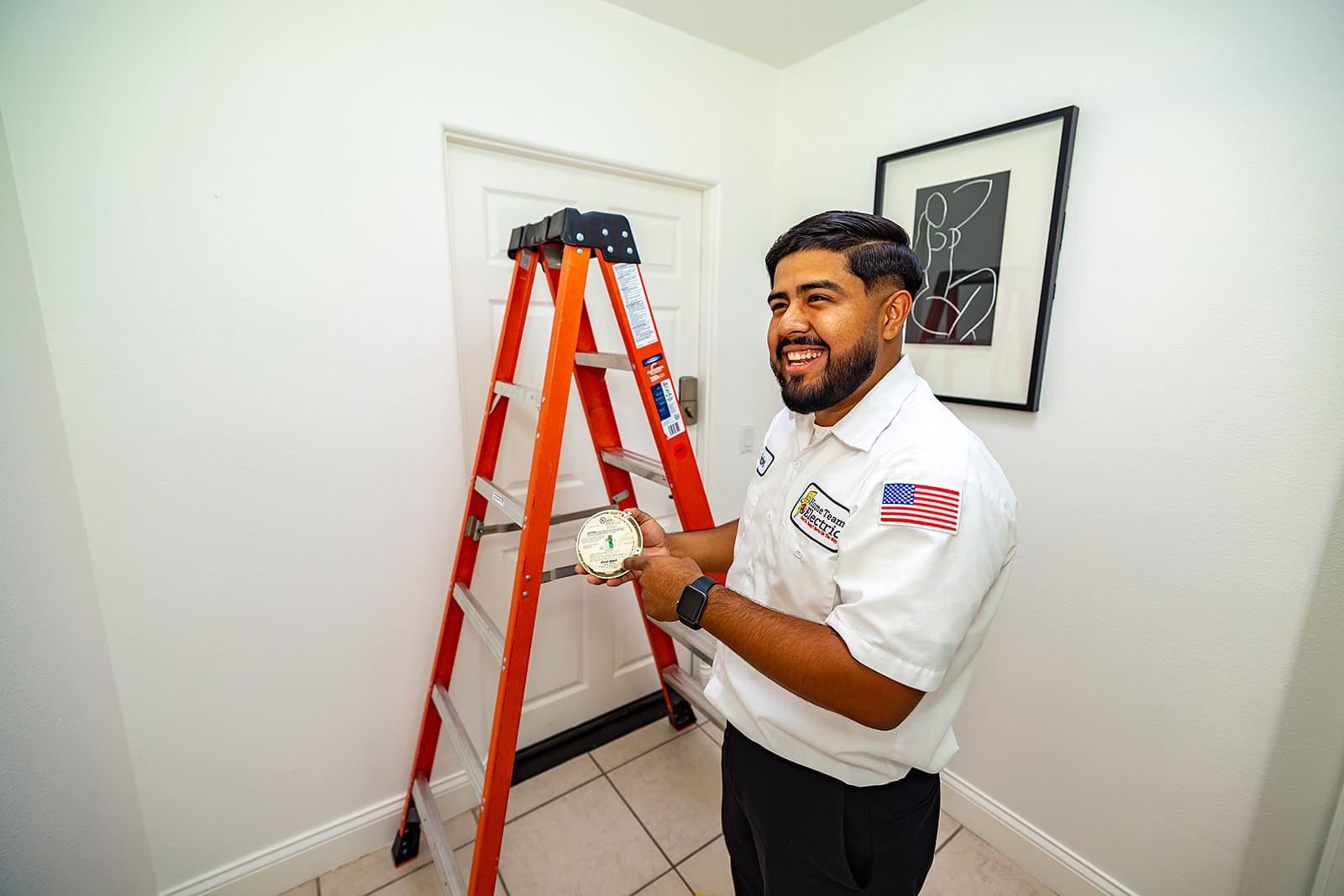
- The protector's indicator light has changed after a storm.
- Electronics in the home died together during one event.
- The power came back wrong after an outage: flickering, half the home dark, or lights too bright.
- You can hear buzzing at the panel after a strike nearby.
Post-event symptoms mean the system absorbed something. The evaluation confirms what survived, what did not, and whether the protection is still standing guard.
What to Expect
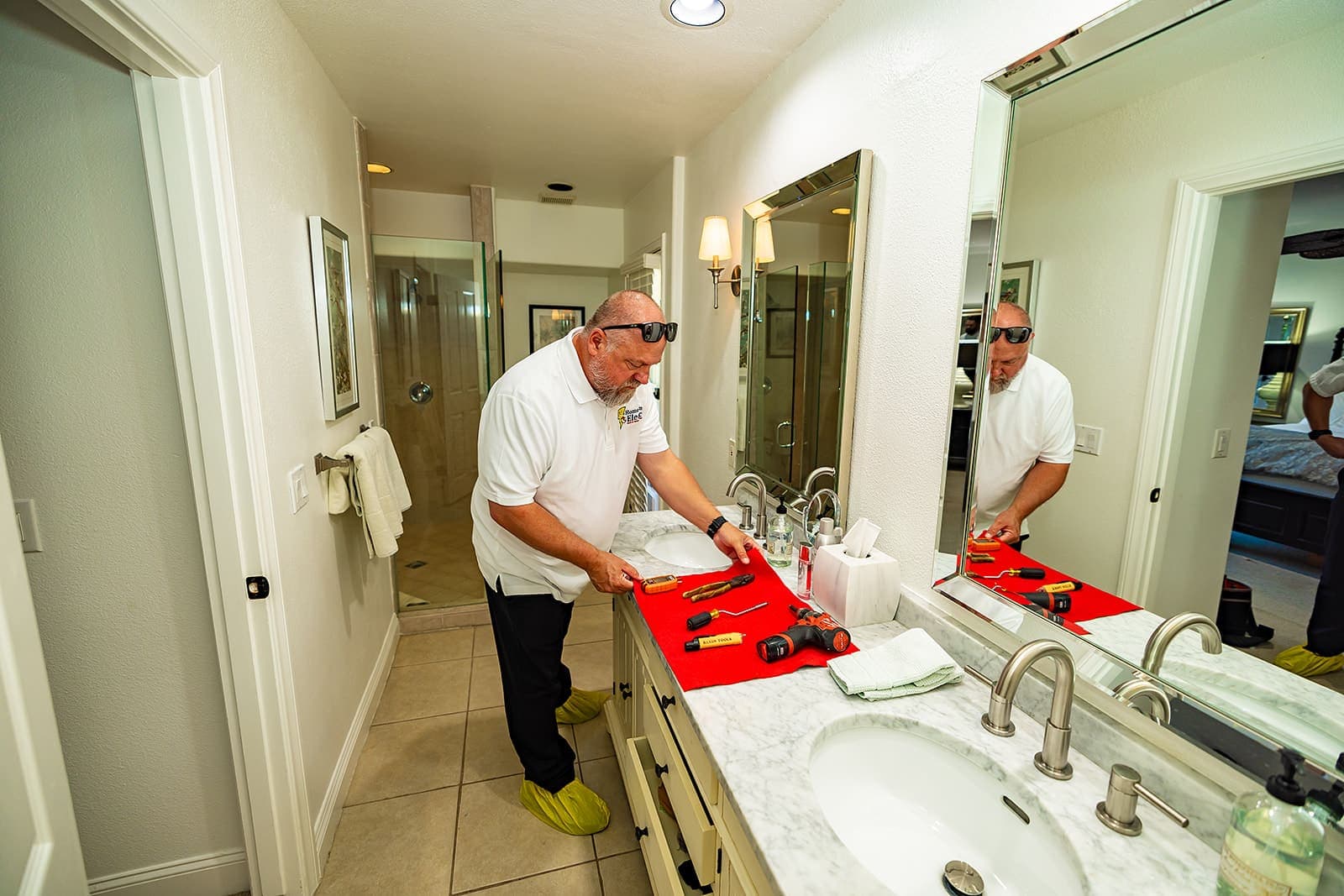
What to Expect During a Surge-Protection Evaluation
Sizing and placement matter more than the brand on the box. Here is how we do it.
- 01
The panel and grounding get evaluated first.
A surge protector is only as good as the grounding it dumps into. Grounding and bonding get verified before any device is recommended.
- 02
Protection gets sized to your actual equipment.
A home with two AC systems, a pool, a spa, and an EV charger needs different capacity than a small gas-appliance home. The recommendation matches what you actually run.
- 03
Installation at the panel, done right.
Short, straight leads at the panel are what make the clamping rating real. The install details decide the performance.
- 04
Written pricing and the Lifetime Workmanship Guarantee.
Full pricing in writing before work begins, and the installation workmanship is backed for life.
Backed by the Work
Certified Expertise and a Fully Stocked Truck
A service fee covers the visit and a fully stocked truck. Our team includes certified residential specialists, electricians in training, and apprentices, and a certified electrician leads or oversees the work in your home. That standard is built on verified field experience, formal technical education, rigorous testing, and ongoing training (weekly classroom training in our own training room). Pricing is presented in full and approved before any work begins. Same-day service available.
- California C-10 Electrical Contractor License #879507. Verify it at cslb.ca.gov.
- Home Team Electric works exclusively on residential electrical systems in desert conditions. All work is code-compliant and backed by our Lifetime Workmanship Guarantee.
Protect the expensive things before monsoon season tests them.
Book a service call with an electrician who works desert homes every day.
Google Search
Get more of our updates on Google
If our work has been helpful, add us as a preferred source: Google will show more of our updates in your Top Stories and AI results. It only changes what you see.
Add as Preferred Source