

Are you struggling with a smoke detector that randomly goes off? If you don’t see any signs of a fire, it can be tempting to ignore the issue. However, a smoke detector that makes noise constantly can indicate some other potential complications. Therefore, it is very important to be able to identify why your smoke detector keeps going off. Here are some common reasons for this annoying and noisy problem.
Unknown Fires
Before you start assuming your beeping smoke detector is harmless, make sure to stop and check for an actual fire. Not all residential fires start as a big, crackling flame in the middle of the room. Electrical fires are one of the leading causes of home fires, and they often start inside walls, ceilings, or floors. Even if you don’t see a fire yet, your smoke detector might sense it.
Take the time to look around for any signs of a fire. Carefully sniff the room to see if you smell burning, and turn a light on to check for smoke. You can also look for electrical fires by seeing if walls feel warm to the touch or looking for scorch marks on the walls. If you notice any signs of a fire, make sure everyone is safe, turn off power if possible, smother the fire, and call emergency services if the fire persists.
Incorrect Placement
Modern smoke detectors are surprisingly sensitive. They’re designed to go off any time they notice a certain volume of particles in the air. Smoke detectors can also be affected by heat. This can be a good thing when smoke is drifting through the home. However, it can be a problem if your smoke detector is in the wrong spot.
Most smoke detectors should not be installed within 10 feet of a stove or oven, and they also shouldn’t be right next to a window. The problem with these locations is that they can unnecessarily trigger your smoke detector. If it gets a few whiffs of a cooking odor or if a breeze blows some dust inside, your smoke detector might go off.
Humidity is also an issue for smoke detectors. High levels of moisture in the air can mimic the density of air filled with smoke. This is why even something simple like a pot of boiling water or a billowing cloud of steam can set your smoke detector off. Placing a detector near an electric kettle, shower, or tub may lead to issues.
Insect Infestations
Sometimes, a creepy-crawly culprit might be behind your smoke detector going off. Smoke detectors have small holes where smoke can enter the device. Unfortunately, these holes are also big enough to let ants, roaches, spiders, and other pests into the device.
If insects decide to make your smoke detector their home, they can cause it to malfunction. Your smoke detector might start going off every time the insects crawl over the sensors or clog up the intakes. Therefore, it’s always a good idea to look for bugs inside your beeping detector.
Dusty Air
If it’s been a while since you dusted your home, the debris can cause problems for your smoke detector. Not only can the dust trick the detector into thinking it’s sensing smoke particles, but it can also build up on sensors and cause the system to malfunction.
Dust is especially likely to lead to false smoke detector alarms if there is a draft. Detectors placed near doors or HVAC vents can go off every time air blows by. It is also more likely to make your detector go off if dust or cobwebs are built up around the smoke detector. Thoroughly cleaning your home can reduce the risk of dust triggering your alarm, but if your alarm is faulty, it might still keep going off.
Carbon Monoxide Buildup
Not all smoke detectors have a carbon monoxide sensor, but many do. These detectors can go off any time there are unsafe levels of carbon monoxide in the air. Since carbon monoxide is a clear, odorless, tasteless gas, you won’t necessarily know if that is causing your detector to go off. Everything might look and seem fine, but your detector might be warning you of a problem.
If carbon monoxide levels are dangerously high, you might feel unwell. This can include headache, dizziness, nausea, trouble breathing, and mental confusion. Even at lower, less noticeable levels, chronic carbon monoxide exposure may cause problems. If you have a furnace, fuel-burning stove, fireplace, or generator, it’s possible you’re dealing with a carbon monoxide leak. Therefore, it’s a good idea to test your indoor carbon monoxide levels any time a smoke detector with a carbon monoxide sensor keeps going off.
Dead Batteries
Whether your smoke detector is fully battery-powered or just has a battery backup, dead batteries can make it go off. Most people are familiar with the warning chirp that a smoke detector might make when batteries die. However, it is also possible for the full siren to go off.
This happens because certain dips in electrical current can mimic the way that electric current declines when smoke in the air is impairing electrical signals. Your smoke detector can misread the reduced power as a sign of fire and start to go off. This may be true even if it’s wired into your power grid and the alarm still technically has power.
VOC Buildup
Volatile organic compounds (VOCs) are a type of chemical that can float around in the air of your home. Just like dust or steam, these tiny particles can trigger your smoke detector. If VOCs are causing problems for your smoke detector, you probably won’t experience constant beeping for months on end. Instead, the smoke detector will just go off at moments when VOCs are abnormally high.
One of the most common reasons for high levels of VOCs is paint. After you paint a room, there is a chance that your smoke detector might go off. Unpackaging new furniture, adding new flooring to your home, or bringing in other high-VOC items can cause issues. In some cases, cleaning products or other chemical solutions can create enough VOCs to trigger your detector.
Electrical Interruption
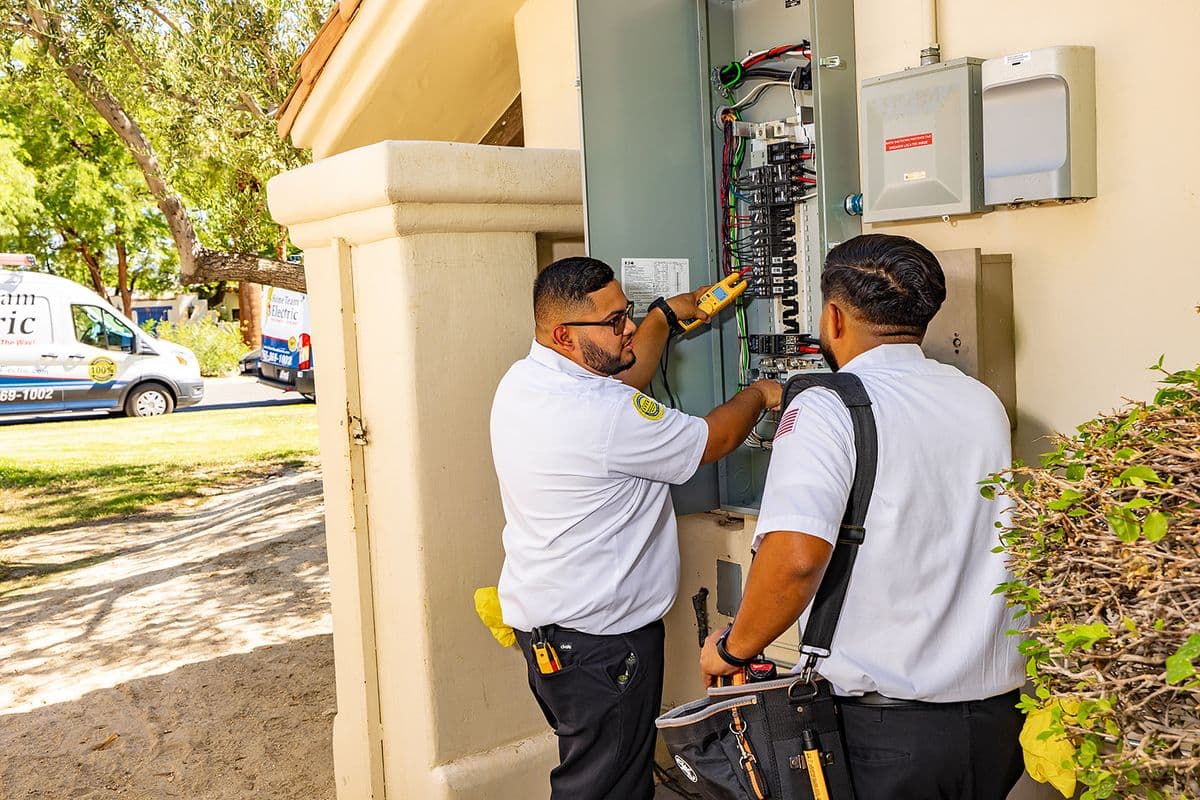
If you have a hard-wired detector, there are all sorts of electrical problems that can lead to your smoke detector going off. Anything that keeps power from getting to your detector for even a few seconds can make the detector go off. For example, power surges, tripped breakers, or blackouts may cause beeping.
Your detector may also go off if it wasn’t installed properly. Things like a loose connection can make your detector beep every time something slightly jars the wiring. Many smoke detectors also have an interconnect wire that’s supposed to let you sync up all the detectors in your home. If this wire is grounded, it can malfunction and make your detector beep.
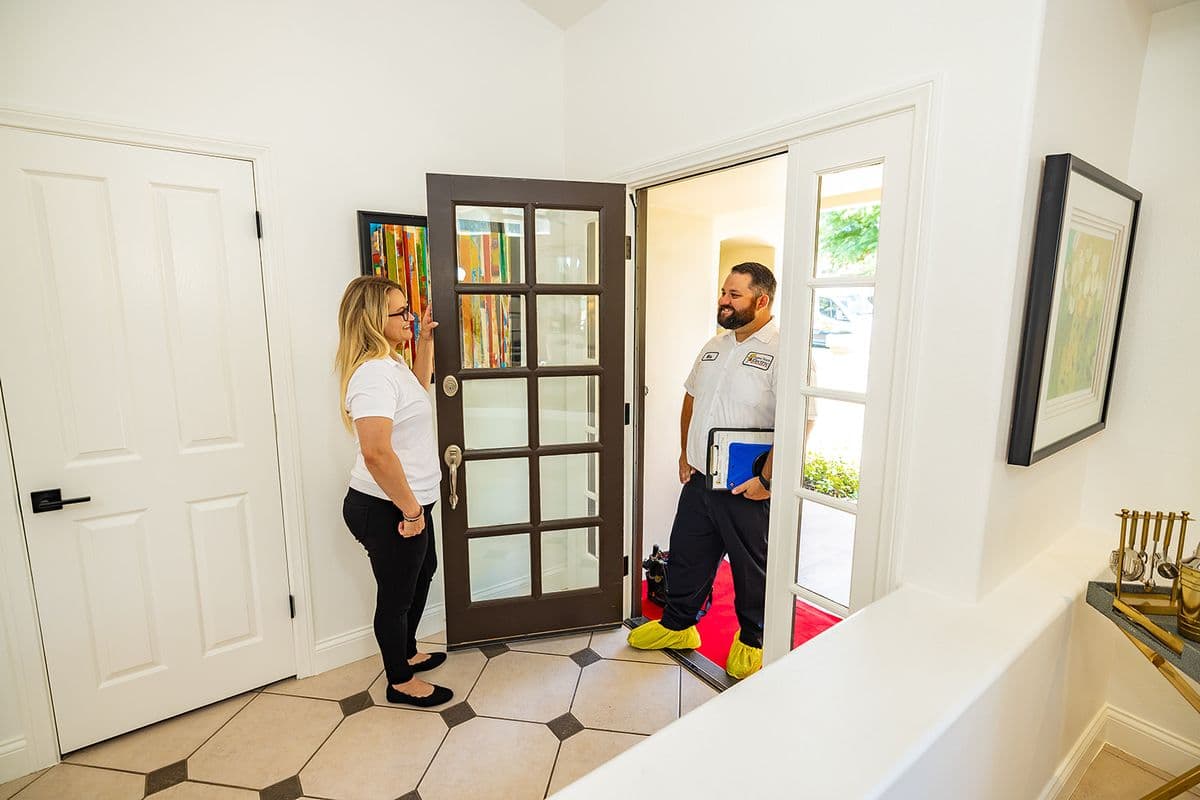
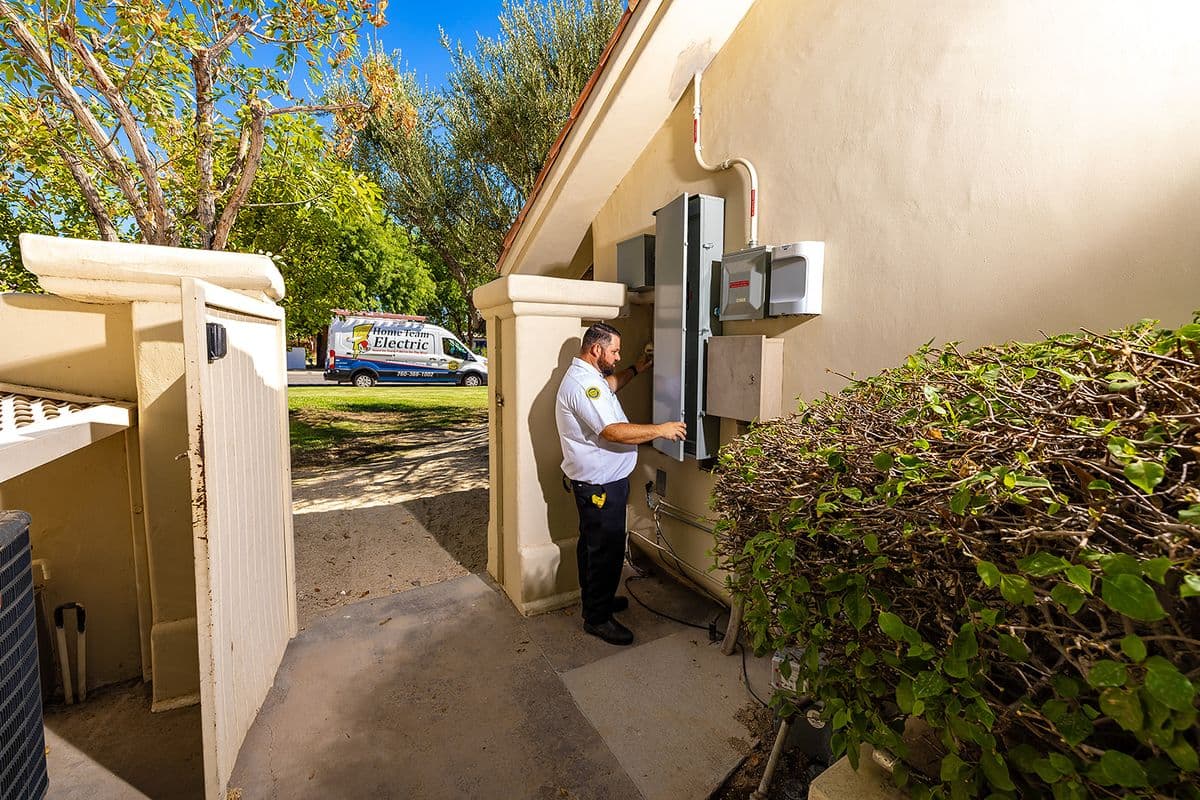
Since so many electrical issues can cause a beeping smoke detector, it is a good idea to get your detectors replaced or inspected on a regular basis. Home Team Electric is happy to come out and examine your smoke detectors. In addition to smoke detector repairs, we also provide a variety of other electrical services throughout the Palm Springs and Coachella Valley region. To schedule an appointment, contact Home Team Electric today.
Google Search
Get more of our updates on Google
If our work has been helpful, add us as a preferred source: Google will show more of our updates in your Top Stories and AI results. It only changes what you see.
Add as Preferred SourceWritten By

Frank Luersen
leadership
There's a running tradition inside Home Team Electric called Frank Pranks, and it says everything about the kind of culture Frank built. Ask anyone on the team about it and they'll grin before they finish explaining it. Someone sets it up, he walks right into it, the room erupts, and whether he actually sees it coming is still an ongoing debate. Frank could settle it anytime. He hasn't.
California C-10 Electrical Contractor License #879507. Verify it at cslb.ca.gov.
Published December 14, 2022