If you’re like many homeowners, you probably don’t think much about electrical codes. Your experience with the term may be quite limited. You might know that an electrician performing work in your house must follow all applicable code requirements, for example, but it’s easy to forget any conversation you had with the electrician regarding the actual code.
The fact of the matter, however, is that you should be familiar with the electrical code in your area and the necessity of adhering to these rules. While it’s true that following the electrical code is essential if you want to sell your house, the most critical factor is the safety of your loved ones and yourself.
Code Specific to Southern California
Southern California does not have its own electrical code. If you live in this region, your home must follow the requirements of the electrical code that governs the entire state of California.
California Code
California has to follow the national code. The National Fire Protection Association established this code, and the current document is referred to as the NFPA 70. This document is known as the National Electrical Code. The code is regularly updated, and the most recent version of the document is from January 2023.
Components of the Code
The entire code is a lengthy document that details numerous rules and regulations to keep your home safe. For example, some of the chapter titles are “Wiring Methods and Materials,” “Special Equipment” and “Special Conditions.” The code discusses proper protocols for performing electrical work as well.
Homeowner Familiarity with the Code
You may be wondering to what extent you need to be familiar with the specifics of the code. The most important information for most homeowners is to know that the code exists and that any service providers performing electrical work in the house need to follow the code. For most homeowners, full comprehension of all jargon in the document is unnecessary. If you have questions about specific components of the code, one of our representatives can discuss the matter with you and answer your questions in detail.
Commercial Settings
The code also covers requirements for electrical safety at commercial and industrial properties. If you own a business or a commercial property, for example, you must make sure that your electricians are certified to perform commercial work and that they do so up to code.
Compliance and Safety
The National Electrical Code exists heavily to make sure people stay safe. Having a home that complies with the code can offer a level of protection against electrical fires. The code details procedures, materials, and other information that electricians must follow in guarding against fires. The code is also important in protecting against electrocution.
For example, over the years, information related to the type of outlets that must be installed near water sources has changed. Currently, the code requires that ground fault circuit interrupters, often shortened to GFCIs (shock prevention), be installed in all kitchen receptacles, which was not previously the case.
Compliance and Future Sales
If your house is not up to code, you might also have trouble selling the property. Prospective buyers may view the house as dangerous, and they may be particularly concerned if they can purchase a more modern house, notably in terms of electrical safety, for a similar price. In other words, even if the house does attract buyers, you might lose out on a more lucrative sale because of the code violations.
One of our representatives can assess your house for code violations and get the dwelling into a more suitable selling condition. If you are purchasing a new house, you should get an inspection done to make sure that the electrical system follows the current code.
Dealing with Current Code Violations
Keep in mind that you are not necessarily required to fix all of the current code violations in your home. For example, you might have had work done in the past that was up to code at the time but no longer is. Your house also might not have had electrical work done in some time. When you get future work done, that work will have to be up to code.
Still, though, primarily for safety purposes, you should work on updating the house to be in line with the current code. Schedule an appointment with our team members who can assess your home and give you quotes for getting the proper work done. You can also talk with a representative about which projects should be the priority.
You could, for example, put your budget toward repairing the most potentially dangerous code violations now and start saving up for the smaller issues to be resolved later.
Projects to Consider
The smartest way to determine which projects you should prioritize when it comes to bringing your house up to code is to have a consultation with one of our representatives. Our team might recommend that you update old outlets, switch to ground fault circuit interrupters near water sources, install dedicated circuits, or increase the overall amperage of the house.
Hiring the Right Company
When it comes to electrical code compliance, there’s no room to take risks. You must make sure to hire a company that follows the code precisely. The business must follow the most updated version of the National Electrical Code. When a representative comes to assess the work, this individual should talk about the code. If no mention of doing work up to code or updating your home’s current electrical system to meet the code is mentioned, you should be skeptical and ask more questions.
Penalties
In addition to the potential safety consequences of failing to do and have work done up to code, other penalties, such as massive fines and jail time, exist. Getting work done that doesn’t comply with the code puts other people at risk as well. For example, improper electrical work threatens tenants in an apartment building and employees in a corporate space. You might be tempted to hire a company that fails to adhere to the code to save money, but you’ll be taking serious, potentially deadly risks by doing so.
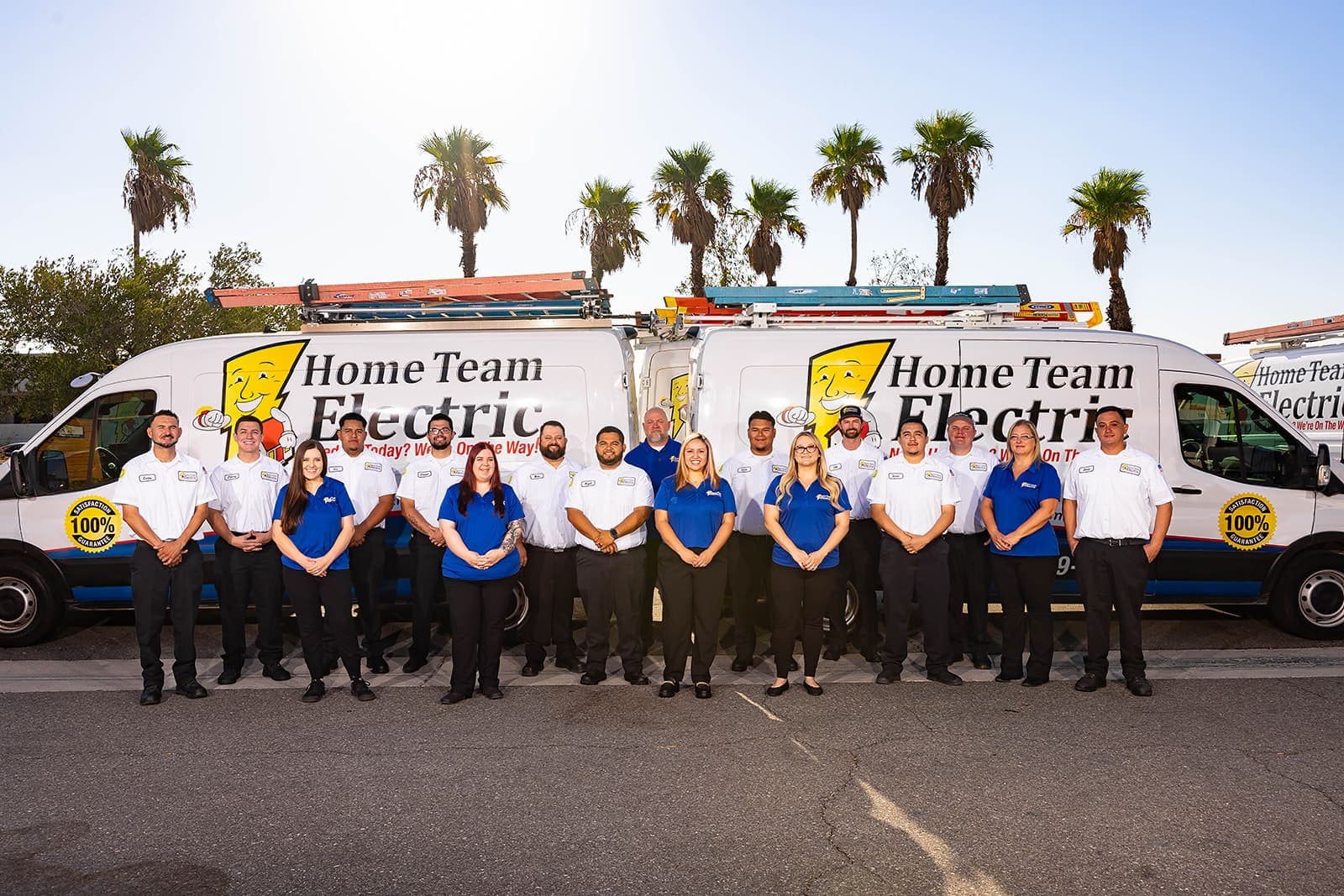
Here are Home Team Electric in Palm Springs, we can perform a full electrical assessment of your house. Our team can help you get your house up to code and will perform any future work in compliance with the requirements. We can install smoke detectors, add a generator to the house, put in new wiring and perform rewiring, upgrade the electrical panel, and more. We also can complete a pool inspection and certification.
Our team members are available 24 hours per day and seven days per week for emergency service as well. We’re available for work in Palm Springs and the surrounding areas, including the Coachella Valley and Morongo Basin. Make sure to ask about our financing plans. To get started on making your home a safer place to live, contact Home Team Electric today.
Google Search
Get more of our updates on Google
If our work has been helpful, add us as a preferred source: Google will show more of our updates in your Top Stories and AI results. It only changes what you see.
Add as Preferred SourceWritten By

Frank Luersen
leadership
There's a running tradition inside Home Team Electric called Frank Pranks, and it says everything about the kind of culture Frank built. Ask anyone on the team about it and they'll grin before they finish explaining it. Someone sets it up, he walks right into it, the room erupts, and whether he actually sees it coming is still an ongoing debate. Frank could settle it anytime. He hasn't.
California C-10 Electrical Contractor License #879507. Verify it at cslb.ca.gov.
Published August 14, 2024