Electricity plays an essential role in our daily lives. Since scientists discovered the uses of electricity, society has found more ways to use it to make life more convenient. Over the last few decades, our reliance on electricity has grown exponentially. We use electricity to power household appliances and smart devices and do much more.
With so much reliance on electricity, it’s important our household electrical systems can handle the increasing electrical demands. If a system is overloaded, the electrical current can spark a fire and cause severe property damage, injuries or even fatalities. Circuit breakers maintain household electrical safety and help us avoid these dangers.
Knowing the role circuit breakers play in household electrical safety is something every person in Coachella Valley should know. We’ll review the basics of circuit breakers, how they work, how they keep your home safe, and how to keep your home’s electricity working safely as our dependence on electricity continues to grow.
What Is a Circuit Breaker?
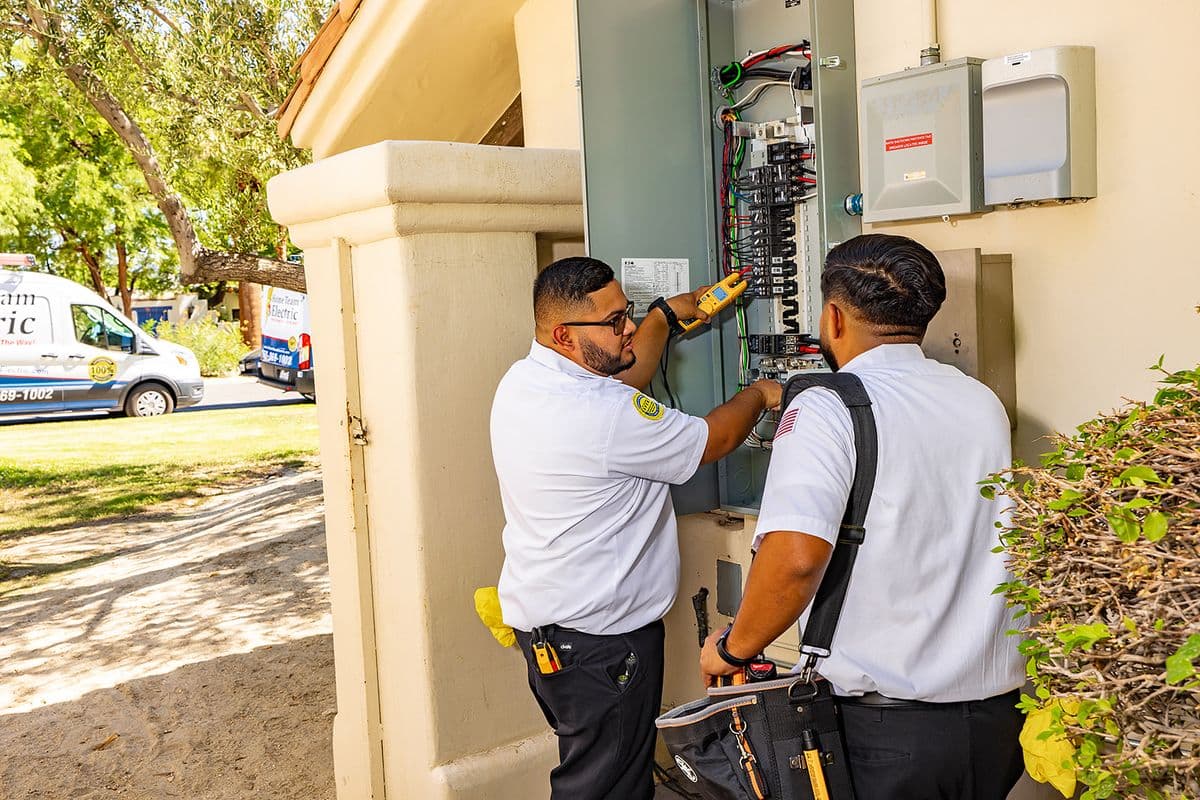
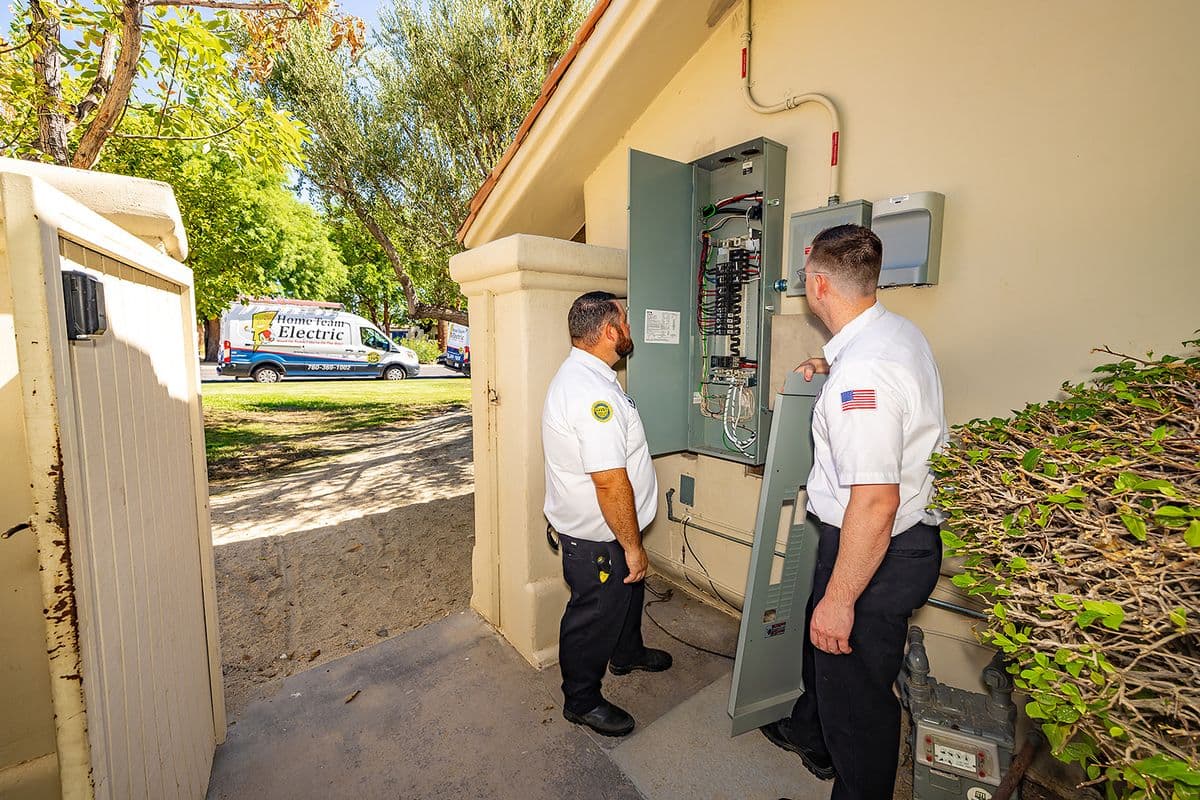
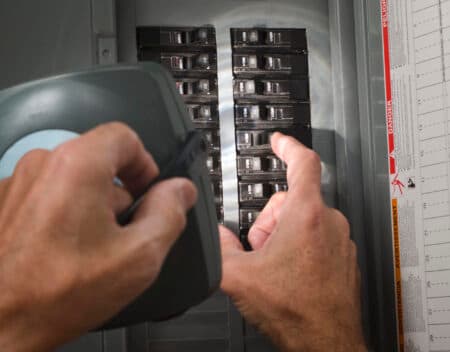
A circuit breaker is a switch in your home’s main electrical panel that automatically stops electrical current when the circuit gets overloaded, short circuits, or experiences a ground fault. It’s an electrical safety device that shuts off or “trips” when it detects a problem.
Circuit breakers have replaced fuses in most households. In older homes, fuses would burst when they became overloaded. They stopped the electrical current, but then the fuse would be damaged and irreparable. Circuit breakers work better at stopping electrical current because they turn off like a switch and don’t require replacement after tripping.
Check out these common reasons for tripped breakers:
- Arc faults
- Damaged circuit breaker
- Ground faults
- Faulty wiring
- Loose electrical connections
- Outdated wiring
- Overloading
- Short circuits
- Tripped GFCI (shock prevention) outlets
The problems mentioned above require the expertise of a licensed electrician to diagnose the issue and make safe repairs. Trying to fix an electrical problem alone, with no electrical training, can cause serious injury and damage to your electrical system and its components.
Types of Circuit Breakers
If you open your home’s main electrical panel, you might think all the circuit breakers look the same. While they appear similar, some have different responsibilities. Here’s an overview of the five types of circuit breakers you might have in your home.
1. Thermal Magnetic Circuit Breakers
These circuit breaks contain a bimetallic strip and an electromagnet. When a circuit overloads, the strip heats up, bends, and breaks the circuit. If it’s a short circuit, the electromagnet’s pull amplifies and triggers the breaker, shutting it off.
2. Magnetic Circuit Breakers
Magnetic circuit breakers rely only on electromagnetism. As the electrical current gets stronger, the magnetic force grows stronger. When the current reaches its maximum strength, the switch flips, and the circuit breaks.
3. Ground Fault Circuit Interrupters (GFCIs)
GFCIs’ main purpose is to protect people from electrical shocks. They monitor incoming and outgoing currents, making sure they’re balanced. If an imbalance is detected, the GFCI assumes electricity has escaped the intended circuit, and the breaker turns off.
4. AFCI (Fire Prevention) Breakers
An electrical arc creates a serious fire risk. An arc occurs when there is a break in the electrical current and electricity has to jump from one point to another, which creates sparking and potential fires. Frayed wires and other wire damage can cause dangerous arc faults.
5. Hydraulic Magnetic Circuit Breakers
These circuit breakers manage short circuits and overcurrents. They rely on a hydraulic time delay along with a magnetic actuator.
Not every household has every circuit breaker mentioned above. For example, GFCI circuit breakers weren’t required in newly built homes before 1971. AFCI outlets weren’t required until 1999. So, if you have a house built before these years, you might not automatically have this protection.
How Circuit Breakers Keep Your Home Safer
Electrical fires affect nearly 34,000 homes and businesses annually, according to the National Fire Protection Association. Electrical failure or malfunction causes nearly 75% of these fires. While those statistics seem daunting, the good news is that you can prevent most electrical fires.
That’s where circuit breakers come into play. These small devices inside your home’s main electrical panel protect the electrical system when the potential for overheating occurs because of broken equipment, faulty wiring, or overloaded circuits. Once the circuit detects unusual electrical current activity, the power to the circuit is cut immediately, preventing an electrical fire and keeping you safe.
Circuit breakers also keep members of your household safe by protecting against ground faults. Faulty wiring, damaged appliances, and worn wires can cause ground faults, but the most common reason for these faults is water leakage.
Water conducts electricity. If water gets into electrical boxes, an unplanned current can occur, resulting in a ground fault. Ground faults can cause electrical shock and electrocution. The most common places where ground faults occur are the kitchen and bathroom. However, ground faults can occur in outdoor outlets, garages, and basements. Anywhere there’s potential for moisture, there’s potential for a ground fault.
How to Improve Circuit Breaker Safety
Safeguarding your home’s electrical infrastructure is crucial. You can improve circuit breaker safety by:
- Scheduling regular inspections
- Making sure electrical loads are sufficient
- Using surge protection
- Choosing professional installation vs. DIY
Another way to improve electrical safety is to avoid excessive extension cord usage. If you rely on extension cords to provide additional power for appliances and other devices in your home, you need more circuits. Extension cords don’t add more power. Instead, they place excess strain on existing circuits, drawing more power than the circuit can handle. You can improve circuit breaker safety by consulting with an electrician to determine if your home needs more circuits to support your household’s electrical needs.
Schedule an Electrical Inspection
You want to catch problems early before they turn into serious and potentially damaging situations. At Home Team Electric, we help homeowners get the most out of their electrical systems without compromising safety. Whether you require new circuit breakers, upgraded wiring, protection against power surges, or any other electrical services, we’ll make sure your home’s electrical system operates safely and exceeds your expectations.
Our family-owned business provides certified electrical installations. We have an A+ rating with the Better Business Bureau and are Ygrene- and Green Screen-certified. Homeowners count on us for 24/7 service, quality workmanship, and 100% satisfaction. All our electricians have passed detailed background tests and undergo regular drug testing. When you work with Home Team Electric, you can rest easy knowing your electrical system is in expert hands. Your household’s safety matters to us as much as it does to you.
If you have circuit breaker problems, don’t wait for them to go away. They won’t. Call Home Team Electric today for professional electrical repair services in the Coachella Valley.
Google Search
Get more of our updates on Google
If our work has been helpful, add us as a preferred source: Google will show more of our updates in your Top Stories and AI results. It only changes what you see.
Add as Preferred SourceWritten By

Frank Luersen
leadership
There's a running tradition inside Home Team Electric called Frank Pranks, and it says everything about the kind of culture Frank built. Ask anyone on the team about it and they'll grin before they finish explaining it. Someone sets it up, he walks right into it, the room erupts, and whether he actually sees it coming is still an ongoing debate. Frank could settle it anytime. He hasn't.
California C-10 Electrical Contractor License #879507. Verify at cslb.ca.gov
Published July 10, 2024