
Our home inspection flagged the electrical panel. Should that change whether we buy the house?
Rarely. It usually changes what you know going into the sale. A buyer was in escrow on a 1965 Yucca Valley house when the home inspection flagged its panel. Our Yucca Valley panel inspection confirmed the inspector’s concerns, found six more conditions, and gave the buyer written options both agents could read.
Nothing was repaired that day. Jimmy Kieffer ran the visit on Tuesday, September 16, 2025. In the middle of a sale, the goal is to find out what you are buying. A home inspection report tells you where to look, but it usually cannot tell you which items are serious and which are minor.
What does a Yucca Valley panel inspection show that the home inspection could not?
It shows what is behind the panel cover. A home inspection is not required to remove a panel cover, reset a breaker, or verify the ground. This Yucca Valley visit went further. The electrician opened the main panel, and the electrical safety check that followed turned up six more conditions.
Home inspectors do an important job, and their standards set the limits of that job. Under the InterNACHI standards of practice for home inspections, an inspector does not have to find the cause of a problem. That is why an inspector who sees a concern will often recommend a licensed electrician take a closer look.
Here is what the visit found, including the inspector’s own concern, and what each item means for a buyer:
| What the visit found | What it means for a buyer |
|---|---|
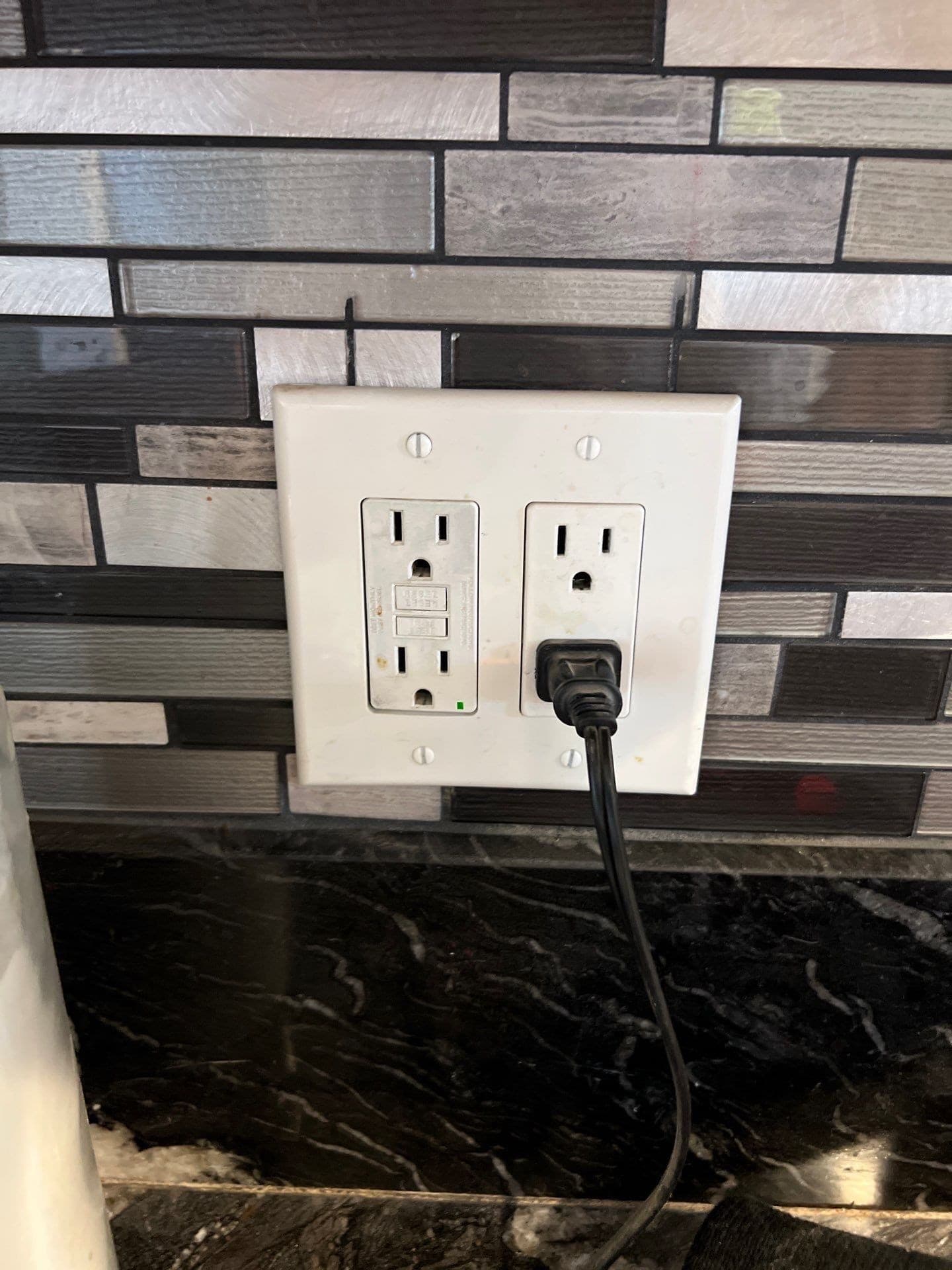
| Missing GFCI (Shock Prevention) protection at outlets that need it | These outlets help reduce the risk of electrical shock near water. |
| Improper grounding | Without proper grounding, a breaker may not trip when something goes wrong. |
| Water heater metal not tied together | Metal piping at the water heater should be bonded together so it does not become energized and create a shock hazard. |
| Outdated breakers | Older breakers may not trip the way they should. |
| Mini-split on a 30 amp breaker with 12 gauge wire | The breaker is larger than the wire can safely handle, so it may not shut off before the wire overheats. |
| No carbon monoxide alarm in the hallway | Nothing would warn anyone asleep. |
| The kitchen breaker the inspector saw tripping | Something is causing it to trip, and finding the cause will take more testing. |
The inspector said a breaker was tripping. What if it behaves while the electrician is there?
You should be told that plainly, in writing. The tripping breaker in this Yucca Valley house was on the kitchen circuit, and it could not be made to trip during the visit. Finding the cause would take further testing, and the written options said so.
A breaker that trips only sometimes can be hard to catch, because it can work normally for days between trips. Jimmy Kieffer did not guess at it. A good electrician tells you the cause is not known yet and explains what it would take to find it.
What does it mean when a house has no shock prevention at the outlets?
It usually means the house was built before those rules existed. This 1965 Yucca Valley home was missing GFCI (Shock Prevention) protection in locations that now require it. That is common for a house of that era, and it is still worth correcting where water and power meet.
A GFCI outlet cuts the power within a fraction of a second if it senses electricity leaking toward a person. It reacts to an amount far too small to trip a regular breaker. That sensitivity is what keeps you safe. InterNACHI’s explainer on GFCI protection covers how it works and where the code requires it.
Bathrooms, garages, kitchens, outdoor outlets and wet bars all put water close to a plug. The code added those places one at a time. If an outlet at your own place has stopped working, our dead outlet troubleshooter walks you through what to check first.
Why do grounding problems and the pipes at a water heater end up on an electrical list?
Because both protect you if something goes wrong in the electrical system. In this Yucca Valley house, the grounding was improper and the metal piping at the water heater was not properly bonded together. Neither is visible from inside the rooms.
At the water heater, the metal water lines meet one appliance. Bonding connects them, so if electricity ever reaches one pipe, it cannot shock you between that pipe and the next one you touch. These are pipes and fixtures you handle every day.
Grounding is the other half. It gives electricity somewhere safe to go when something fails, which is what lets the breaker trip and cut the power. A house can go for decades with both done poorly while everything seems fine. Our plain-language explanation of grounding covers what this means day to day.
The breakers in this 1965 house were outdated. Is age by itself a problem?
Age alone is not a defect, and the home inspection standards say so directly. The breakers in this Yucca Valley panel were outdated. That tells you they are older, not that they have failed, and nobody can judge their condition from outside the panel.
An older panel can show up on a home inspection as one short line. Opening it shows what is really there, and inside this one the Square D breakers were dusty and worn.
Here in the desert, heat matters too. A panel in Yucca Valley goes through very hot afternoons and cold nights, and the metal parts inside expand and contract with the temperature. Over the years, that can loosen connections, and a loose connection is where overheating starts. InterNACHI’s overview of service panels and what a panel update actually involves are both worth reading before you decide on any work.
Why is a 30 amp breaker on the mini-split circuit a problem?
Because the breaker is there to protect the wire. The mini-split circuit in this Yucca Valley house had a 30 amp breaker and 12 gauge wire. The unit’s own specifications call for a 15 amp circuit. A breaker rated above what the wire can safely carry may not trip when it should.
Wire can only safely carry so much current. Past that, it can overheat inside the wall, where nobody can see it.
This circuit had more than one problem. The breaker was too large for the 12 gauge wire feeding it, and double what the mini-split itself calls for. The run also did not use the proper type of wiring and conduit.
A home inspector does not have to check equipment against the manufacturer’s instructions. So an oversized breaker on a mini-split usually will not show up on a home inspection.
Is a missing carbon monoxide alarm really an electrician’s problem?
It is a safety issue, and it tends to come up when an electrician checks the whole home instead of one complaint. This Yucca Valley home had no carbon monoxide detection in the hallway. Carbon monoxide has no color and no smell, so an alarm is the only warning you get while you sleep.
Carbon monoxide alarms belong outside the bedrooms, which is why the hallway matters. InterNACHI’s guidance on carbon monoxide explains where the gas comes from in a house and why alarms belong near bedrooms.
How do I put all of this in front of two agents?
Give them specific conditions in writing. In Yucca Valley, the buyer left the visit with every finding written in plain terms. That included the one item that could not be settled that day. Two agents can work through a list of specific conditions, but a vague note that the panel has issues gives them nothing to act on.
Before anyone opens your panel, make sure they are properly licensed and insured. Home Team Electric holds California C-10 electrical contractor license 879507 and has served homeowners throughout the Coachella Valley and Morongo Basin since 2006. You can verify any California contractor through the Contractors State License Board. It takes a minute, and it is worth doing for every contractor on your list, including us.
A different client, writing about another visit with Jimmy, called him “smart, efficient and friendly” and added, “He surpassed our expectations!”
If your inspection report flags the panel on an older home you are buying, have a licensed electrician open it. Ask for the conditions in writing before anybody negotiates. Call 760-248-8709, or see how we work across Yucca Valley and what turned up in other homes in the valley. You should come away knowing what is confirmed and what still needs an answer. Then the decision is yours, with the full picture.