We’ve all seen them before: those commercials where fires are burning uncontrollably or buildings are exploding because of an electrical malfunction, but the truth is they don’t happen all that often. Nevertheless, if you ever find yourself in this situation, it’s important to know what to do. A poorly wired house or office and a faulty appliance can result in an electrical emergency. Although you should contact an electrician if you have any doubts about your electrical system, you can use our Home Team Electric guide as a starting point for what to do in an electrical emergency.
Types of Electrical Emergencies
There are four different types of electrical emergencies you can experience:
- Power outages
- Electrical shocks
- Electrical fire
- Fallen power lines
We will illustrate how to stay safe and what steps you should take if you find yourself in any of the mentioned cases. Read on for more details.
Power Outages
Power outages are quite common in many places of the world. They can occur due to the instant breakdown of a motor or the failure of an electric supply. They can also be triggered by weather conditions, like lightning or storms. And so, here are steps to follow just in case you face a power outage.
1. Turn Off Your Main Power Source
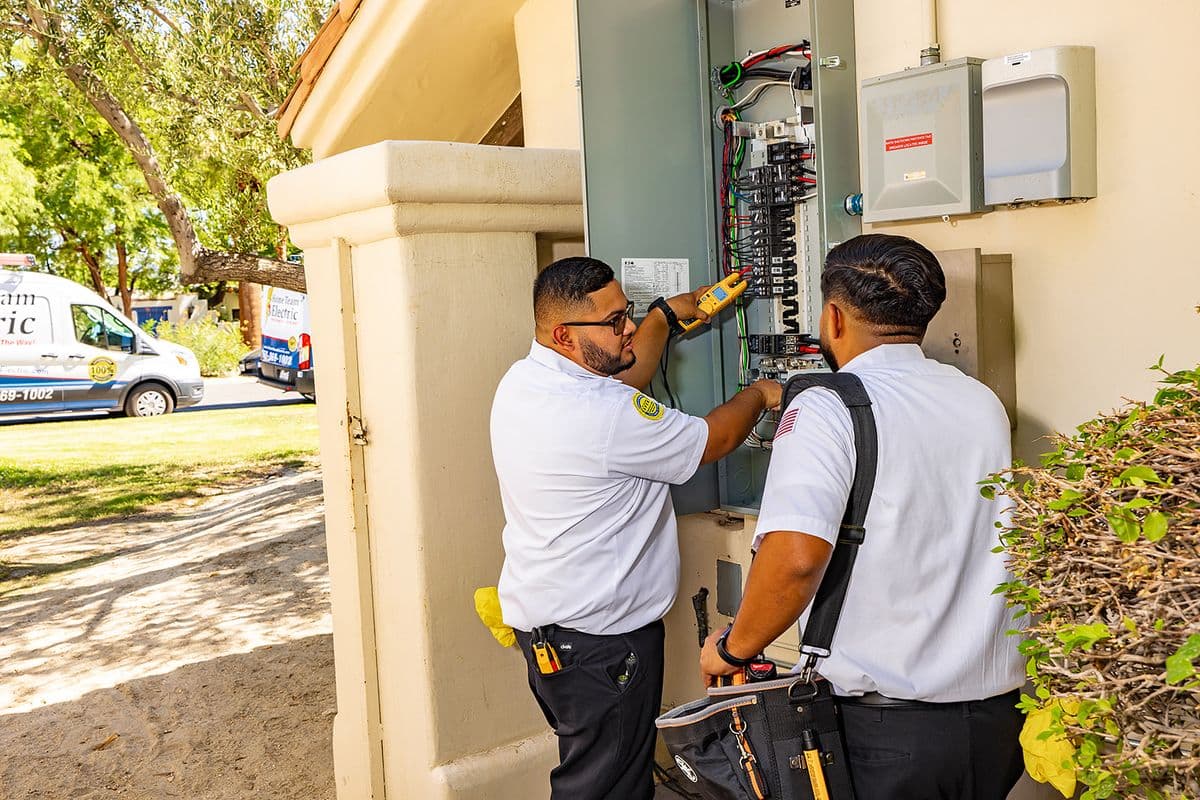
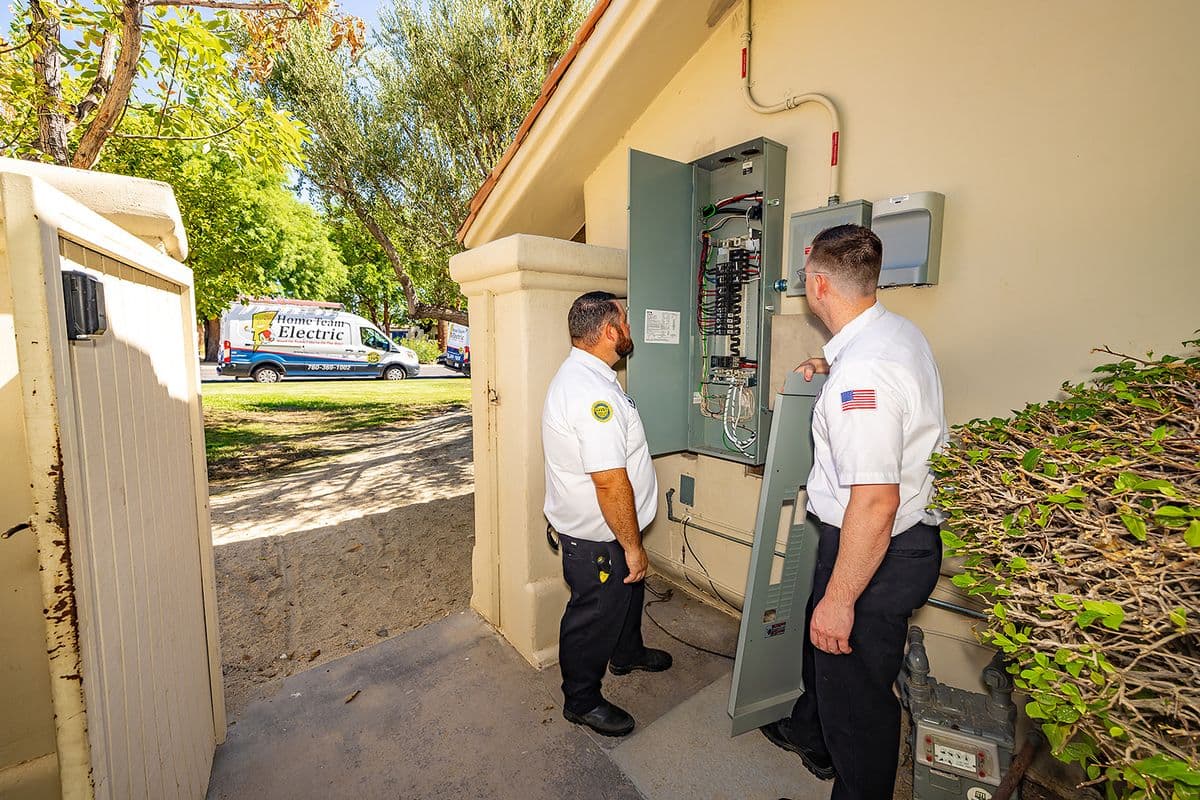
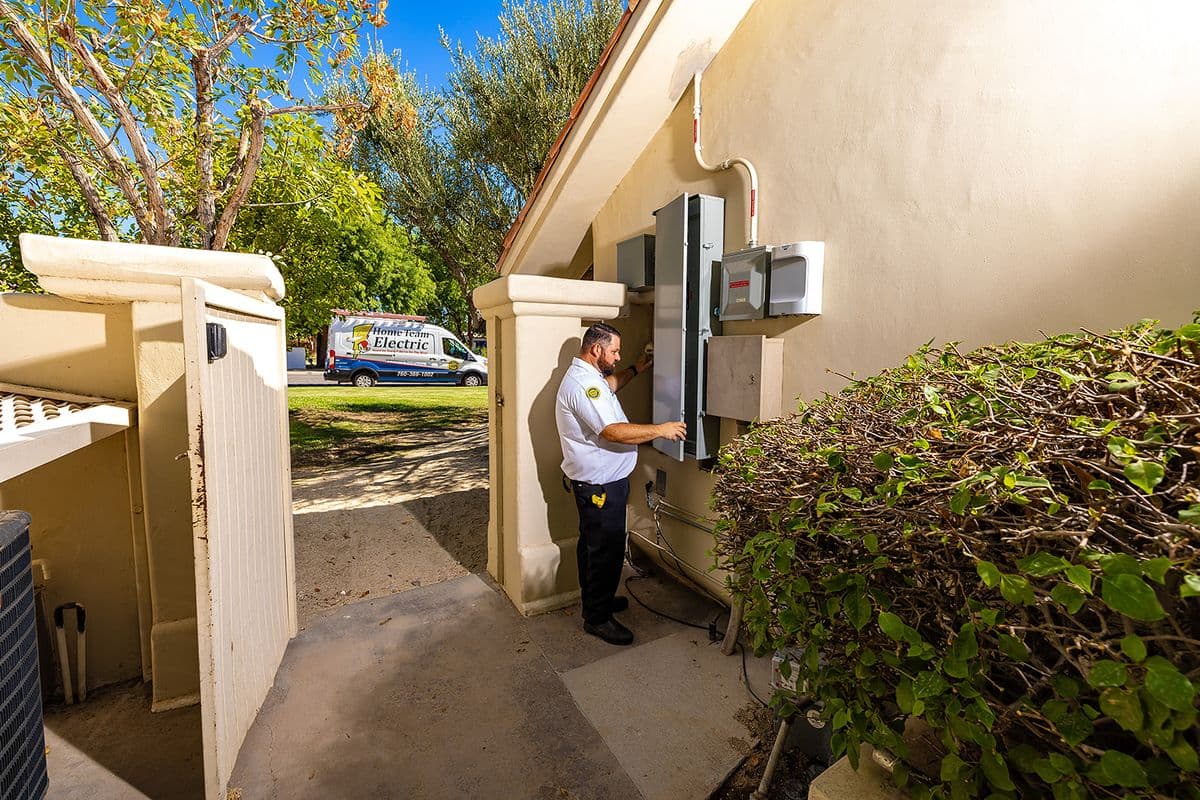
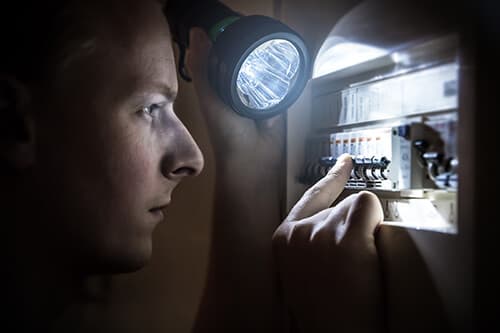
Turning off your main power source is the most important thing that you can do. It will turn off any hot, electrically charged equipment and will prevent it from sparking. You can turn off your main power switch in your fuse box or circuit breaker in your electrical panel.
2. Check the Source
After turning off the main source of power, you need to check the source of the problem. Look out for too many extension cords or too many appliances connected to one outlet. Also, check for any malfunctioning appliances.
3. Unplug Unnecessary Appliances
If you have appliances that you can use later, make sure to unplug them from your outlets.
4. Look for any Damaged Breaker or Wiring
Check for any damage in your outlets or your circuit breaker. These can be caused by too high a voltage or voltage fluctuation. Faulty wiring can also be the cause of a power outage.
5. Contact Your Power Distributor
If you’ve located the problem and it’s safe to turn on your main power source, do so. Also, call your distributor to report the problem. In case of a power failure, they will be able to send out a repair crew to fix the problem.
Electrical Shocks
Electrical shocks are quite common. They happen when people touch a live wire or electrical equipment that is in an “On” position. Remember to turn off any source of electricity before working on any equipment. And here is how you can handle an electrical shock.
1. Turn Off Your Power Supply
Turn off the power supply and If you are not close to the circuit, try, and cut the contact between the electrical source and the person using something insulated like a wooden rod or a PVC pipe.
2. Don’t Touch a Person Who Received an Electric Shock
You should never touch a person who has received an electric shock, even if they are unconscious. Doing so could lead to you getting shocked as well.
3. Call Your Emergency Service
After you’ve turned off the power and made sure that there is no risk of a new electric shock, you need to call your emergency service. They will then guide you on what to do next as you wait for their arrival.
Electrical Fire
Electrical fire occurs when too much electricity flows through a wire or a cord. These wires usually get heated up and result in a fire. Electrical fires are quite common and occur in homes, offices, and factories. If you ever find yourself in this situation, keep calm and follow the listed tips.
1. Cut the Power Supply
If you have found any fire and are unable to put it out, you should try and cut the power source. Find the circuit breaker or fuse box and shut it down. This will cut off the electricity and prevent the fire from spreading.
2. Put Out the Fire With a Fire Extinguisher
If you can’t shut down the power source, use a fire extinguisher to put out the fire. Using a fire extinguisher will lower the temperature of the wire and prevent it from heating up anymore.
3. Call the Fire Brigade Immediately
Although you can put out a fire with a fire extinguisher, it is best to call the fire brigade. They have the right equipment to deal with your situation, and they will also help you by giving their suggestions.
4. Evacuate the Site
If you cannot stop the fire and it’s spreading, you should evacuate the site. Stop, drop, and roll if you catch fire until the flames go out.
Fallen Power Lines
Fallen power lines are quite dangerous. They can seriously injure or threaten your life and anyone in your vicinity. Follow these steps to deal with this problem.
1. Keep a Distance of at Least 40 Feet Away
A fallen power line may still have electricity flowing through it. Hence, it’s essential to avoid contact with it. Forty feet is a recommended minimum distance you should keep between you and the fallen power line.
2. Don’t Touch Any Object That Is in Contact With the Fallen Power Line
The fallen power line may have fallen on a tree, bush, or other objects. If this is the case, do not touch them. They may still be electrified and can cause an electric shock to whoever touches them.
3. Contact Authorities
You should call for help and inform the authorities about the fallen power line. Your local utility company will then notify their emergency services to remove the fallen power line.
To make sure that you are never affected by power outages, electrical shocks, electrical fires, or fallen power lines, you should call a reliable electric repair company that can carry out preventive maintenance of your home’s electrical system. Always make sure that they have the appropriate license and insurance before hiring. Also, remember to cover your outlets with surge protectors.
At Home Team Electric, our mission is to help our clients lead their lives securely by safely accessing their homes, businesses, and other properties. We’re dedicated to providing them with a quality service that is efficient and dependable. We strive to make sure they are delighted with the service they receive in every way possible.
Home Team Electric services include lighting, surge protectors, fuses, electrical switchboards, wiring, ceiling fans, code compliance, breakers, and fuses and much more. We are also well-known for our electrical repairs, replacements, upgrades, and installations. We provide written estimates for every job we undertake, and we make it a point to give honest advice and personal help whenever needed.
Contact Home Team Electric today in Palm Springs, CA, to get more information on our services and pricing packages. We currently serve residents of the Coachella Valley, Morongo Basin & Surrounding Areas.
Google Search
Get more of our updates on Google
If our work has been helpful, add us as a preferred source: Google will show more of our updates in your Top Stories and AI results. It only changes what you see.
Add as Preferred SourceWritten By

Frank Luersen
leadership
There's a running tradition inside Home Team Electric called Frank Pranks, and it says everything about the kind of culture Frank built. Ask anyone on the team about it and they'll grin before they finish explaining it. Someone sets it up, he walks right into it, the room erupts, and whether he actually sees it coming is still an ongoing debate. Frank could settle it anytime. He hasn't.
California C-10 Electrical Contractor License #879507. Verify at cslb.ca.gov
Published January 12, 2022